Why the Green Fades: That Bright Color Was Never the Grass
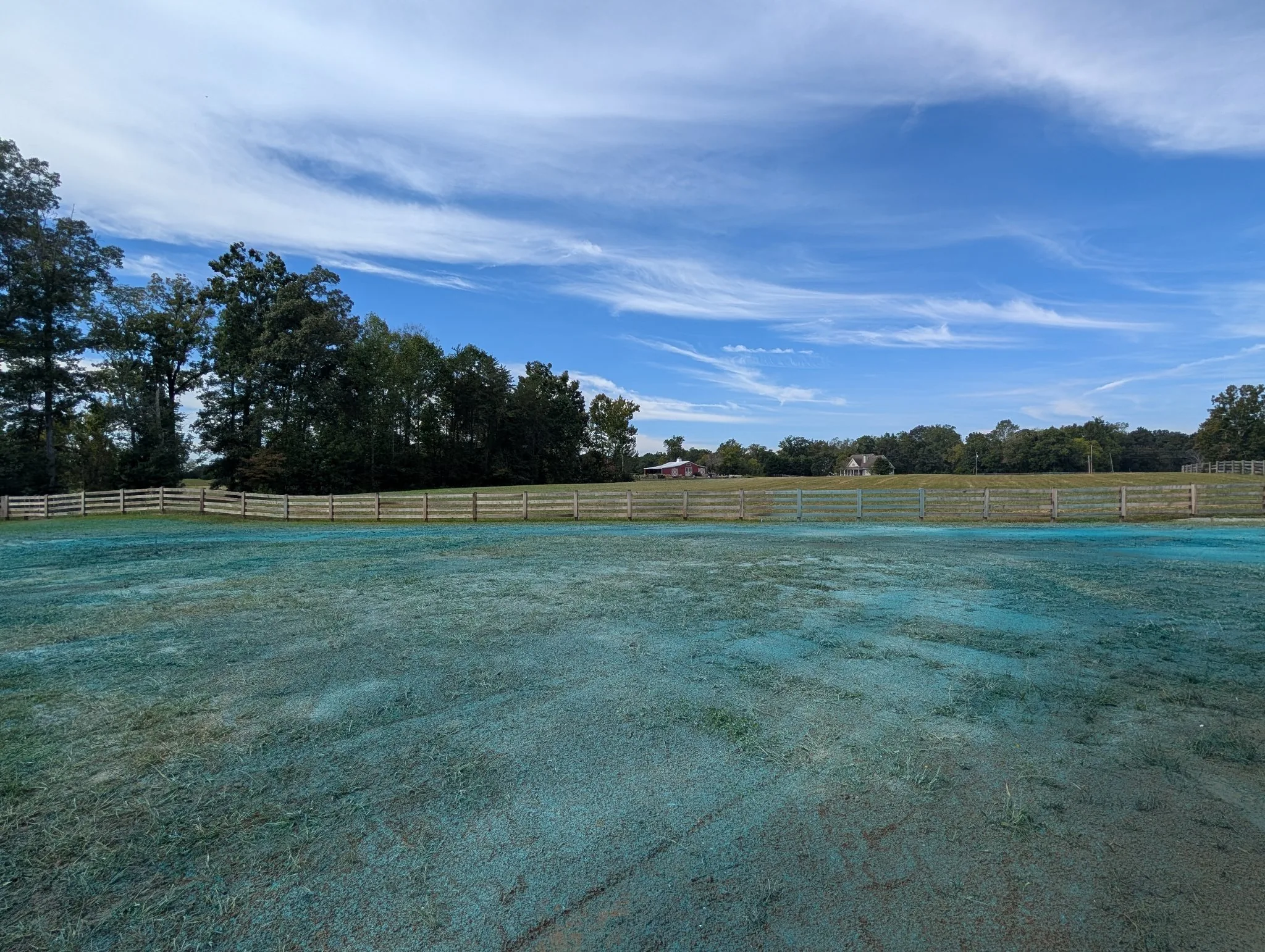
Almost every hydroseed customer has the same moment about a week after the job. The yard that went down a vivid, almost artificial green is fading to a duller, patchier tone, and it looks, frankly, like something is going backwards. Neighbors who watched the spraying ask if it died. It did not. What you are seeing is the dye doing exactly what it was supposed to do and then getting out of the way, and understanding that one fact prevents more unnecessary worry than any other thing we can tell a new lawn owner.
The bright color comes from a dye mixed into the mulch. Its job is practical, not cosmetic. While spraying, the color lets the applicator see exactly where the slurry has landed and how evenly, so there are no missed strips or double-covered bands across your yard. After the job, that same color lets you see the coverage too, which is genuinely useful in the first days when you are learning your watering routine and want to spot the dry, pale areas quickly. The dye is made to break down in sunlight and weather. It is a temporary marker, not a treatment.
As the dye fades over the first week or two, what remains is the mulch itself, in its natural, duller tones, and underneath it, the actual project: seed germinating on its own schedule. The lawn's real green arrives from the bottom up, as thousands of small sprouts push through the mulch layer. There is an awkward in-between stage on nearly every job, including well-watered yards in Powell and Farragut, where the dye is mostly gone and the sprouts are still short and sparse. That stage looks thin. It is usually just young.
Here is how to read your yard during the fade so you worry about the right things. Look closely, at ground level, not from the street. You should see fine green shoots scattered through the mulch, more every few days. That is progress, even when the yard's overall color looks muted. What deserves attention is different: areas with no sprouts at all well after the rest has started, mulch that has washed away and left bare soil, or ground that stays soggy and sour. Those point to watering gaps, a washout, or drainage, all fixable, and none of them have anything to do with the dye.
Your watering should not change because the color did. Keep the mulch damp with light, frequent watering until germination is well established, then taper toward deeper, less frequent sessions. People sometimes water extra hard to chase the bright color back, and that only risks washing the mulch mat they are trying to protect. The fading is also a decent reminder that the green you eventually want comes from healthy grass and the starter fertilizer that went in the tank, feeding roots you cannot see yet.
If you want the full picture of what is in the mix and what each part does, Knoxville hydroseeding explains the ingredients and the process in plain terms. Knowing that dye is just a marker tends to make the whole first month calmer for everyone, including the neighbor with opinions.
And if, after a fair window, a small spot truly does not take, we offer free return visits to address it, so you do not have to guess alone at week three. If you are planning a job in the Knoxville area, pricing is $700 per tank covering up to 2,500 square feet, or $6,000 per acre for larger ground. Call 423-358-2317 or request a free quote, and we will happily explain the fading green before your yard ever changes color.
Want it handled start to finish? The East Tennessee hydroseeding crew does the prep, the spray, and the follow-up.
Every yard is different. Get a free quote from East Tennessee hydroseeding before you decide.