The First Mow: When and How High to Cut a New Hydroseed Lawn
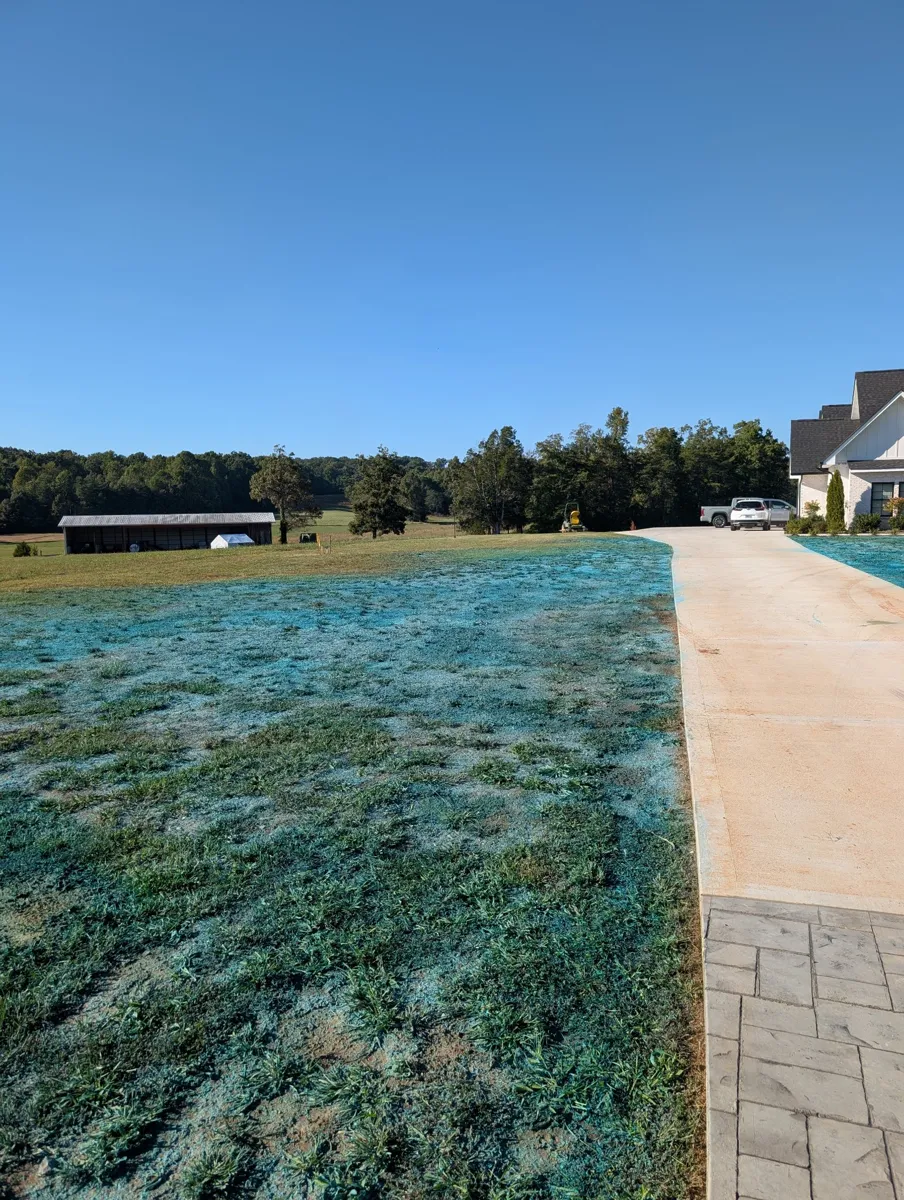
There comes a day, usually a few weeks after hydroseeding, when a new lawn finally looks like it needs mowing, and the owner stands in the driveway holding a mower key like it is a test. The first mow matters, but it is less fragile than people fear if you follow a few plain rules. Cut too early, too short, or on soggy ground and you can tear up weeks of progress. Wait for the right height and conditions, and the first mow actually helps the lawn thicken.
The simplest rule is about height, not the calendar. Wait until the grass reaches roughly four inches, then mow it down to about three. The principle behind it is the one-third rule: never remove more than a third of the blade in a single cut. New grass is building roots with the energy those blades collect, and scalping it back hard at its first mow starves exactly the growth you have been watering for a month. Germination is staggered, so judge by the bulk of the lawn, not the tallest early sprouts in the damp corner by the downspout.
Ground conditions matter just as much. Mow when the soil is firm and reasonably dry, not the morning after a soaking rain when the mower's wheels will rut soft East Tennessee clay and the tires will drag seedlings sideways. Young grass roots are shallow, and a mower turning sharply on wet ground can twist whole tufts out of the soil. Make wide, gentle turns, overlap your passes a little, and consider a walk-behind mower for the first cut or two even if you normally ride, especially on small Knoxville yards and any slope at all.
Your blade should be sharp, and this is not fussiness. A dull blade tears grass instead of cutting it, leaving ragged tips that brown at the edges and invite disease, and on tender new growth the tearing also tugs at weak roots. If you cannot remember when you last sharpened or replaced the blade, the answer is before the first mow. Also keep clippings light. On a first cut at the right height, clippings are short enough to leave in place, where they break down and return a little nutrition to soil that started out as builder dirt.
After the first mow, settle into a routine that stays on the high side through the lawn's first season. Cutting around three inches, and never letting it get so tall that you have to hack it back, encourages the grass to spread and shade its own soil, which discourages weeds better than any product you could put on a young lawn. Speaking of products, keep weed-and-feed away from a new lawn in this stage, and remember it never belongs in a hydroseed tank in the first place, since the herbicide kills germinating seed. Patience with chemicals in year one pays in root depth.
A few soft or thin spots at first mow time are not a verdict. Edges along concrete and the tops of slopes dry faster and often lag the rest of the yard by a week or two. Keep their water steady and give them the same gentle treatment. If a small spot does not take at all, we offer free return visits to address it, so you are not hand-seeding corners forever. The general care timeline is also laid out at Knoxville hydroseeding if you want to check what normal looks like at your stage.
If you are coming up on a first mow and something looks off, or you are planning a hydroseed job in the Knoxville area and want the whole first-season picture before you start, call 423-358-2317 or request a free quote. Pricing is $700 per tank covering up to 2,500 square feet, or $6,000 per acre for larger properties, and advice about your first cut is always free.
Want it handled start to finish? The East Tennessee hydroseeding crew does the prep, the spray, and the follow-up.
Every yard is different. Get a free quote from East Tennessee hydroseeding before you decide.