Septic-Safe Seeding: Grasses That Protect a Drainfield in East Tennessee
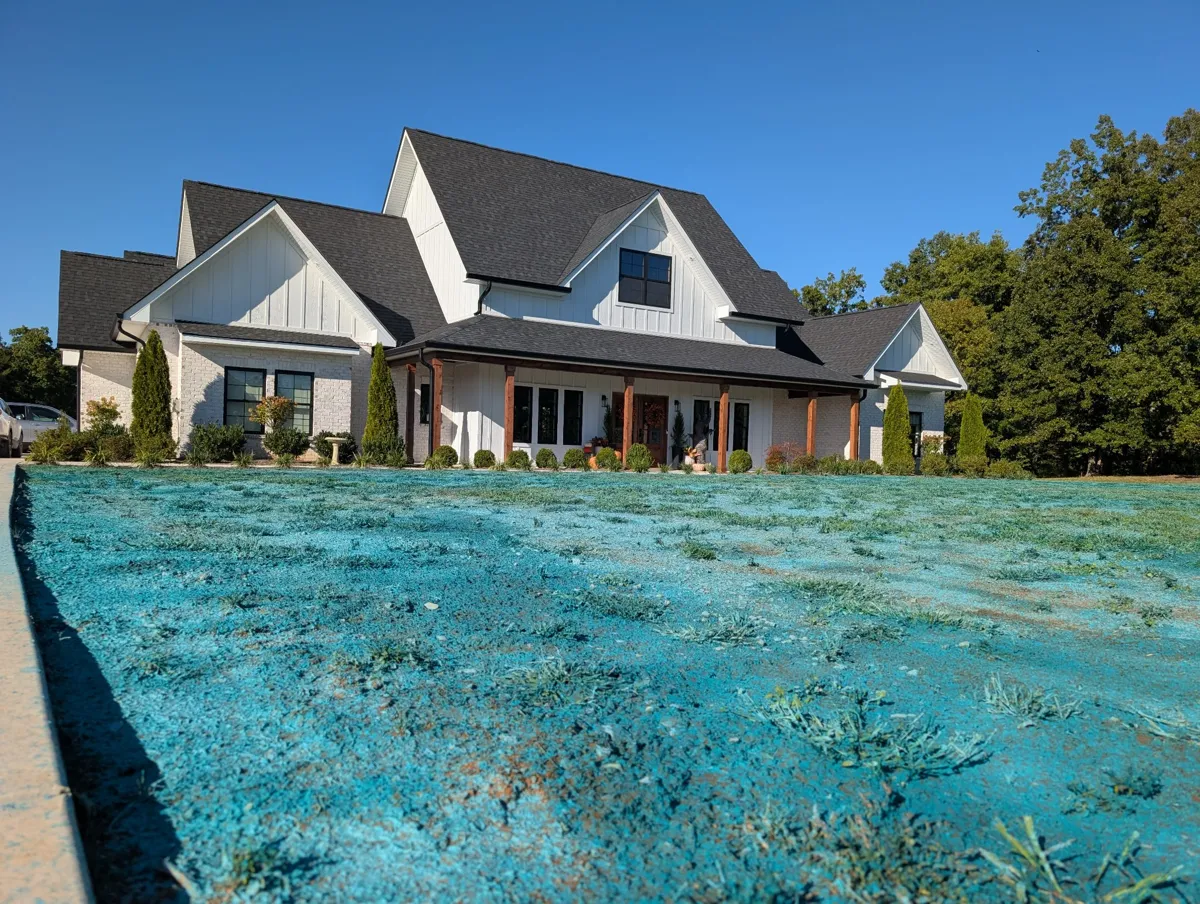
If your home in East Tennessee runs on a septic system, the grass over your drainfield is not just decoration. It is part of how the system works. A good stand of grass holds the soil in place, keeps rain from cutting channels across the field, and pulls moisture up out of the ground. A bare or patchy drainfield, which we see a lot around Sevierville, Dandridge, and the rural parts of Knox and Blount counties, erodes, ponds, and invites the wrong kind of growth. Hydroseeding is a clean way to get that cover established evenly, as long as it is done with the septic system in mind.
The first rule is to know where everything is before anyone sprays or drives. Locate the tank, the lines, and the full drainfield area, and keep heavy equipment off it. A hydroseeding rig sprays from a hose, which is a real advantage here, because the mix can be applied without running machinery back and forth across the field and compacting the soil the system depends on. Compaction is the quiet enemy of a drainfield. The soil needs to breathe and drain, and packing it down with tires or tracks works against both.
The second rule is about what kind of plants you want there. Grass is ideal. Its roots are shallow and fibrous, they hold the top layer of soil, and they do not go hunting for water the way tree and shrub roots do. Keep trees, large shrubs, and gardens off the drainfield entirely. A volunteer sweetgum or a row of bushes planted over the lines will cause more trouble over time than any thin grass ever will. When we talk seed for a drainfield, we mean a durable turf grass that fits your sun conditions, not deep-rooted plantings you cannot mow.
Grass choice follows the light, just like any other Knoxville area yard. A drainfield in full sun in Jefferson County can carry the same sun-loving turf you would use on an open lawn. A field that sits at the edge of the woods and gets half shade needs a shade-tolerant approach and realistic expectations. What matters most is even coverage, and that is where hydroseeding earns its keep. The mulch in the slurry keeps seed moist and in place on ground that is often slightly mounded or sloped, where dry seed would wash toward the low end in the first hard rain.
What goes in the tank matters around a septic system too. Plain starter fertilizer in the mix is fine and helps the new grass get moving. Never add weed-and-feed to the tank, because those herbicides can kill the germinating seed you are trying to establish over the field. Tenacity can be used in the tank where crabgrass is a concern and still let grass seed germinate, but keep it out of any clover-inclusive mix, because it kills clover. If part of your plan near the house includes clover, say so, and the drainfield mix and the yard mix can be handled accordingly.
Once the drainfield is seeded, care is simple but specific. Keep the seed moist while it germinates, keep foot and vehicle traffic off the field, and mow the new grass like a regular lawn once it is established, not letting it turn into a hayfield. Tall, neglected growth shades itself out in patches and invites woody weeds, which is the opposite of what the system needs. And hold off on weed control until the new grass is established and has been mowed at least two or three times.
Drainfields also tend to sit near slopes and property edges where soil wants to move, and a lot of our customers deal with both problems at once. If your lot needs a wall or drainage work to hold a bank near the field, that is worth sorting out before you seed, and you can see examples of that kind of work at retaining wall contractor in East Tennessee while you plan the order of jobs. Seed after the dirt work, not before, so the new cover is not torn up by the fix that protects it.
Pricing for a drainfield job is the same straightforward math as any other work we do in the Knoxville area. It is $700 per tank for up to 2,500 square feet, or $6,000 per acre for larger areas, and if a small spot does not take, we offer free return visits to touch it up. You can read more about the seeding process itself at Knoxville hydroseeding before you call.
Need solid, septic-safe cover over your drainfield this year? Call 423-358-2317 or request a free quote, and we will walk the field with you and plan it right.
Want it handled start to finish? The East Tennessee hydroseeding crew does the prep, the spray, and the follow-up.
Every yard is different. Get a free quote from East Tennessee hydroseeding before you decide.