Overseeding a Thin Lawn: Can You Hydroseed Over Existing Grass?
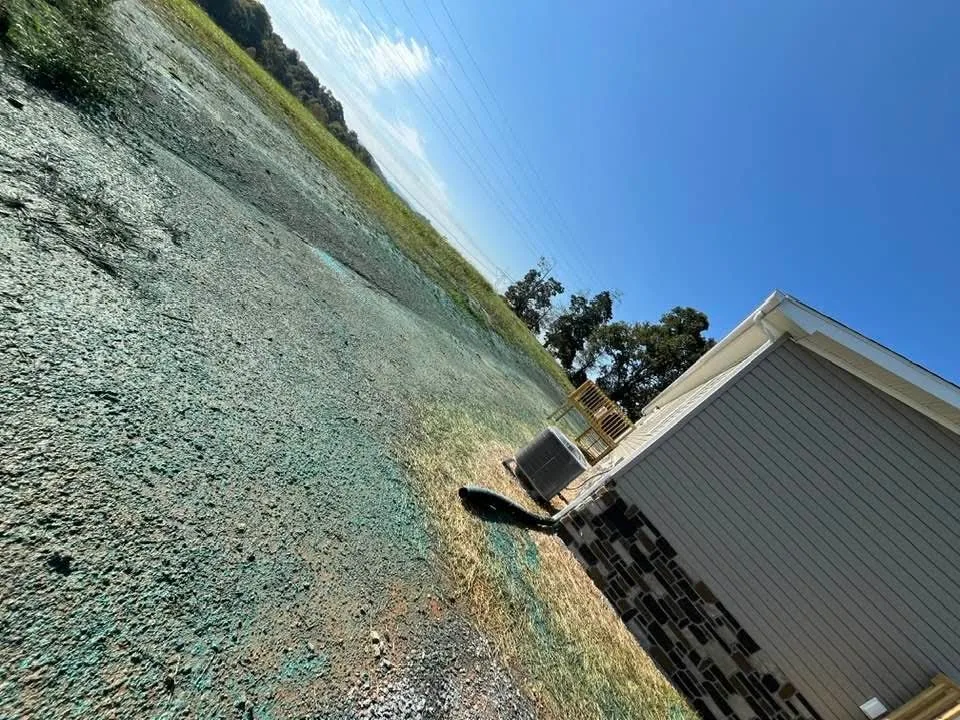
It is a hopeful question, and we hear it all over Knoxville: my lawn is thin, patchy, and tired, so can you just hydroseed right over the grass that is there and thicken the whole thing up? The short answer is sometimes, with conditions. Hydroseeding over an existing lawn can work, and on the right yard it is a practical way to overseed without tearing everything down to dirt. But seed of any kind obeys one rule above all others. It has to reach soil. Grass seed that lands on top of a thick layer of existing growth and thatch and never touches ground will not become a lawn, no matter how it was applied.
Here is where hydroseeding over grass works best. The existing lawn is thin rather than dense, with visible soil showing between plants, the kind of yard common in older Knoxville neighborhoods where shade, clay, and years of summer heat have thinned things out. The surface gets prepared so seed can work its way down: mowed shorter than usual right before the job, and cleared of leaves and debris. In that setting, the slurry settles through the sparse growth, the mulch holds moisture at the soil level, and new seed germinates in the gaps, thickening the lawn from inside its own weak spots.
Here is where it disappoints. A lawn that is actually thick but looks bad for other reasons, such as disease, deep shade, compacted soil, or soil chemistry problems, will not be fixed by adding seed on top. Neither will a yard covered in a dense mat of weeds or thatch. In those cases the seed cannot reach soil evenly, and even the grass that sprouts competes with an unresolved problem underneath. The honest first step there is diagnosing why the lawn thinned in the first place. Sometimes the answer is modest, like correcting watering or addressing soil acidity with a test and lime. Sometimes a section needs to come down to real prep and a fresh start, which is a smaller job than redoing a whole yard that mostly needs help.
Timing an overseed in East Tennessee points clearly at fall. New seed mixed into an existing lawn faces less weed competition in autumn, cooler air reduces the watering burden, and the established grass around it is shifting energy to its roots rather than pushing hard top growth that shades out seedlings. Spring overseeding can work, but it runs into crabgrass season and rising heat with young grass at a disadvantage. If your thin lawn can wait for the fall window, it will reward the patience more reliably than almost any product you could buy in April.
A few product rules carry over from new seeding. The hydroseed mix itself brings seed, mulch, and starter fertilizer, and that starter feeding is fine for the existing grass too. Weed-and-feed never goes in the tank, since it kills germinating seed, and it should stay off an overseeded lawn during establishment for the same reason. Tenacity is the nuanced case: it can be in the tank in some situations, except in clover mixes. Those details are worth a conversation specific to your yard rather than a guess from a store shelf.
Pricing for overseeding follows the same simple structure as new work in the Knoxville area: $700 per tank covering up to 2,500 square feet, and $6,000 per acre for larger properties. Details on the service are at Knoxville hydroseeding if you want to compare overseeding against a fresh start for your worst sections. And if a small spot does not take, we offer free return visits to address it, so a stubborn thin patch gets a second look instead of a shrug.
If your lawn is thin and you are not sure whether it is an overseed candidate or a restart, call 423-358-2317 or request a free quote. We will look at the actual grass, tell you which sections qualify for which approach, and save you from paying to seed ground that needed something else first.
Want it handled start to finish? The East Tennessee hydroseeding crew does the prep, the spray, and the follow-up.
Every yard is different. Get a free quote from East Tennessee hydroseeding before you decide.