New Construction Hydroseeding in Lenoir City: From Bare Builder Dirt to a Lawn
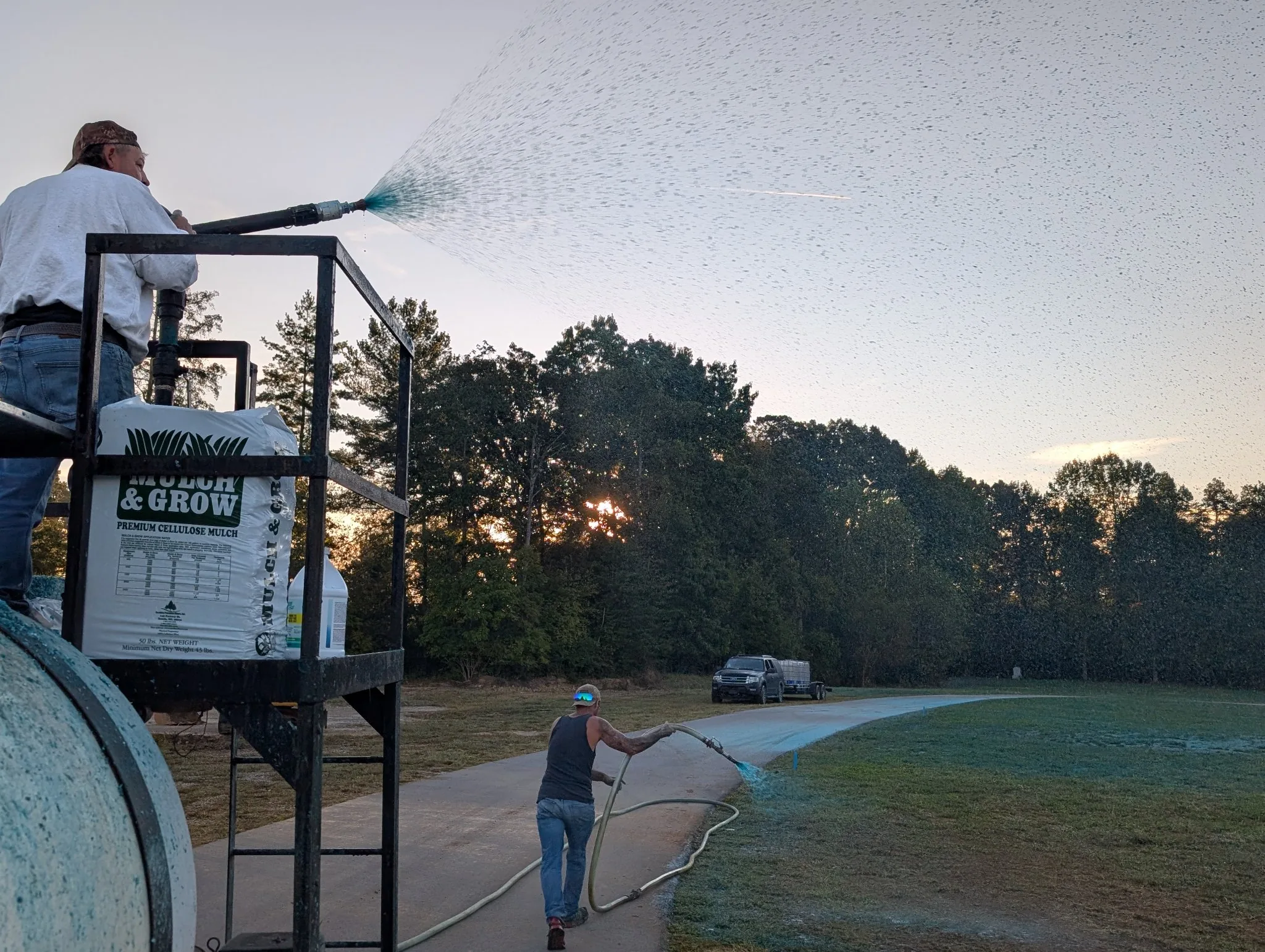
A new house in Lenoir City usually comes with a familiar view: a beautiful home sitting in the middle of scraped, packed, orangey dirt. Builders are focused on the house, as they should be, and the yard at closing is often graded just enough to drain and pass inspection. Turning that into a lawn is its own project, and hydroseeding is how a lot of new construction in Loudon County gets it done in one step instead of a summer of patchy attempts.
Timing the job around the rest of the build saves headaches. Hydroseed should go down after final grading, after the driveway and walkways are in, and after buried lines and drainage work are finished. Spraying before a trench gets dug for a last utility run means paying to fix a strip through a new lawn. If you are near closing, ask your builder what ground work is truly done, not just scheduled. A short wait for the last machine to leave is cheaper than reseeding around fresh ruts and tire tracks.
Prep on a new lot is mostly about what construction left behind. Rocks pushed up by grading, chunks of concrete, scrap lumber, and compacted lanes where trucks ran all need attention. Seed cannot root through debris, and a hydroseed layer sprayed over a rock pile just makes a green rock pile for a few weeks. The top surface should be loosened where equipment packed it down, and low spots where water will pond should be smoothed out. This is unglamorous work, but on new construction it matters more than the seed blend.
That packed builder dirt is usually East Tennessee clay under a thin skin of soil, and it behaves accordingly. It sheds water when dry and holds it when wet. Hydroseeding suits it because the mulch in the slurry holds moisture against the seed and the tackifier helps it stay put on fresh grades and gentle slopes, which new subdivisions have plenty of. Starter fertilizer goes in the tank with the mix, giving seedlings a first feed. Weed-and-feed never goes in the tank, because the herbicide would kill the very seed you just paid to plant.
New homeowners also need a watering plan before move-in boxes are even unpacked. Fresh hydroseed needs light, frequent watering for the first couple of weeks, and new construction yards rarely have irrigation installed yet. That means hoses, a few sprinklers, and a timer, arranged ahead of time. Corner lots and long Lenoir City lots can be a stretch for one spigot, so map your reach honestly. Yards that get watered evenly come in evenly. The far dry corner is almost never a seed problem.
Cost on a typical new lot is easy to estimate. Hydroseeding runs $700 per tank in the Knoxville area, and one tank covers up to 2,500 square feet. Larger properties are priced at $6,000 per acre. Many standard subdivision yards land in the one to three tank range, which you can sanity-check by measuring your lot and subtracting the house, driveway, and beds. There is more detail on the process at Knoxville hydroseeding for homeowners planning around a closing date.
Finally, keep expectations in season. A fall seeding on a new Lenoir City lot often looks like the neighborhood's best yard by spring. A late spring seeding will need more patience and water heading into summer. If a small spot does not take, we offer free return visits to address it, which matters on new lots where a washout or a missed corner is common.
If your Lenoir City build is nearly done and the yard is next on your list, call 423-358-2317 or request a free quote. We will look at the lot, talk honestly about prep and timing, and give you a clear price before any spraying starts.
Want it handled start to finish? The East Tennessee hydroseeding crew does the prep, the spray, and the follow-up.
Every yard is different. Get a free quote from East Tennessee hydroseeding before you decide.