Late Fall Lawn Seeding in Knoxville: How to Get a November Lawn Started Right
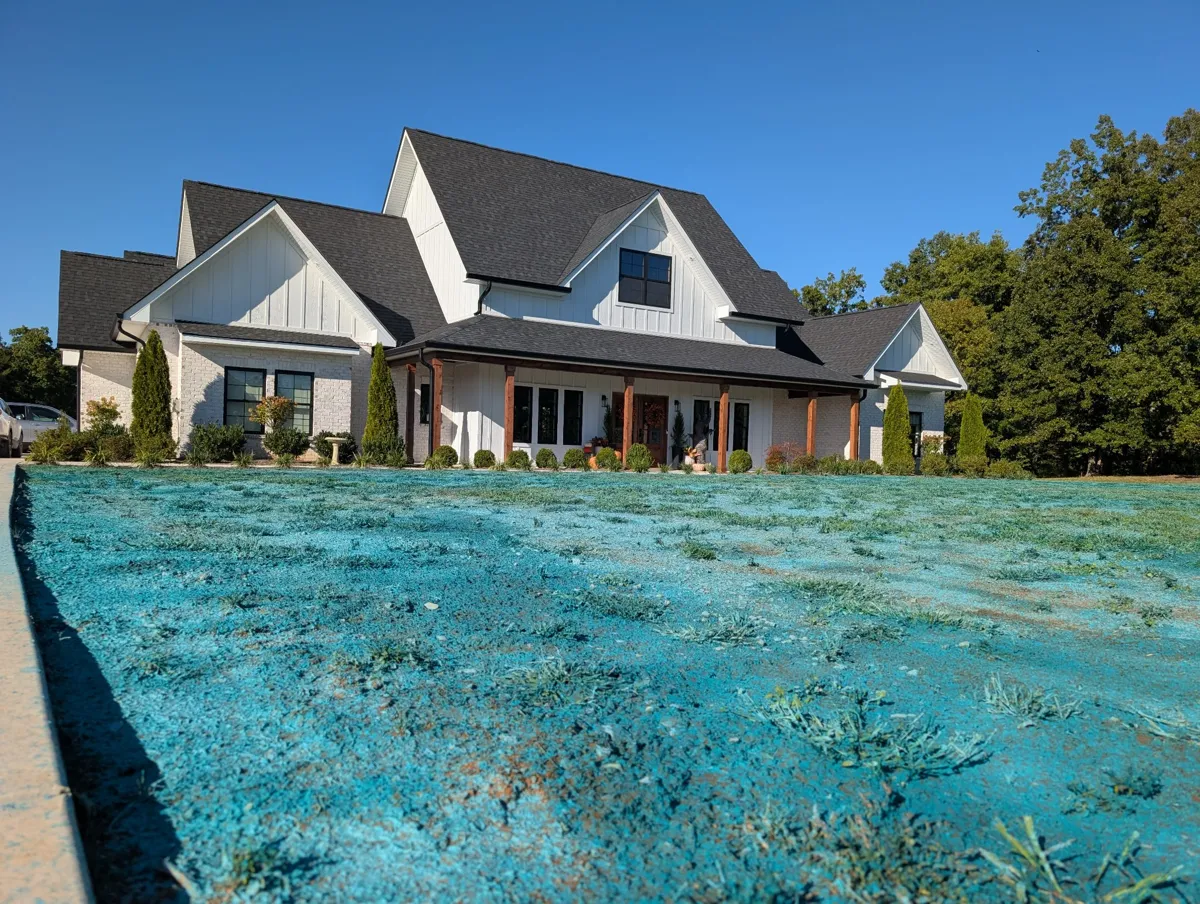
By mid-November, a lot of Knoxville homeowners assume the window for starting a lawn has closed until spring. That is not quite true, but it does require honest expectations. Fall lawn seeding in Knoxville works on a different timeline than September seeding. Seed put down now may sprout in a mild stretch, or it may sit through cold weather and come up as soil warms. Either way, getting seed in place in the fall is often better than staring at bare mud all winter.
The advantage of a late-season start is what happens underground and at the surface. Hydroseed mulch helps hold seed on the ground through winter rain instead of letting it wash into the street or collect in low spots. Seed that is already in contact with the soil is ready the moment conditions suit it. Bare ground, by contrast, spends the winter eroding, compacting, and growing a fine crop of winter weeds that will greet you in March.
Temperature decides how much you see before winter. Tall fescue, the workhorse grass for East Tennessee lawns, germinates best when soil is warm, roughly in the 50s and above. In a mild Knoxville November, you can still get visible sprouting in a few weeks. In a cold snap, germination slows or pauses. That pause is normal and is not a sign the job failed. Patience is part of late fall work, and judging the lawn in December by July standards will only frustrate you.
Prep matters even more this late in the year because you have less growing weather to rescue a sloppy job. The ground should be graded, large rocks and debris removed, and leaves cleared off the area before spraying. A thick layer of leaves left under or over the seed will smother young grass. After spraying, keep leaves from matting down on top by blowing them off gently once the mulch has set, rather than raking through new seed.
Watering in late fall is easier than in summer, and that is welcome news. Cooler air and shorter days mean the ground dries slowly, and Knoxville usually gets more cooperative rain. You still want the seed bed damp during any warm, dry stretch after application, but you are not fighting August heat. If a hard freeze is in the forecast, do not worry about the seed itself. Seed tolerates cold far better than young, actively growing plants in some other categories, and dormant periods are a normal part of its life cycle.
Pricing for a late-season job is the same structure as the rest of the year. It is $700 per tank, with one tank covering up to 2,500 square feet, and $6,000 per acre for larger properties. That means a homeowner can fix the worst bare areas now, a front yard or a muddy side yard by the driveway, without committing to sod prices in November. You can read more about how the service works at Knoxville hydroseeding if you are weighing a fall start against waiting for spring.
There is one trade-off to name plainly. A lawn started this late will not be thick and mowable before winter in most years. If you need instant, finished green for a holiday event or a home sale photo next week, hydroseeding in mid-November is the wrong tool. If you need ground covered, erosion slowed, and a head start that pays off visibly in spring, it is a sound, economical move.
We also offer free return visits if a small spot does not take, which is especially reassuring on a late-season job where one shaded corner may lag. Watch the lawn through winter, keep traffic off soft ground where you can, and plan on the real show arriving as days lengthen. If your Knoxville yard is bare going into winter, call 423-358-2317 or request a free quote, and we will tell you honestly whether a fall start or a spring booking makes more sense for your ground.
Want it handled start to finish? The East Tennessee hydroseeding crew does the prep, the spray, and the follow-up.
Every yard is different. Get a free quote from East Tennessee hydroseeding before you decide.