Hydroseeding vs Sod in Knoxville: Which Is the Better Deal?
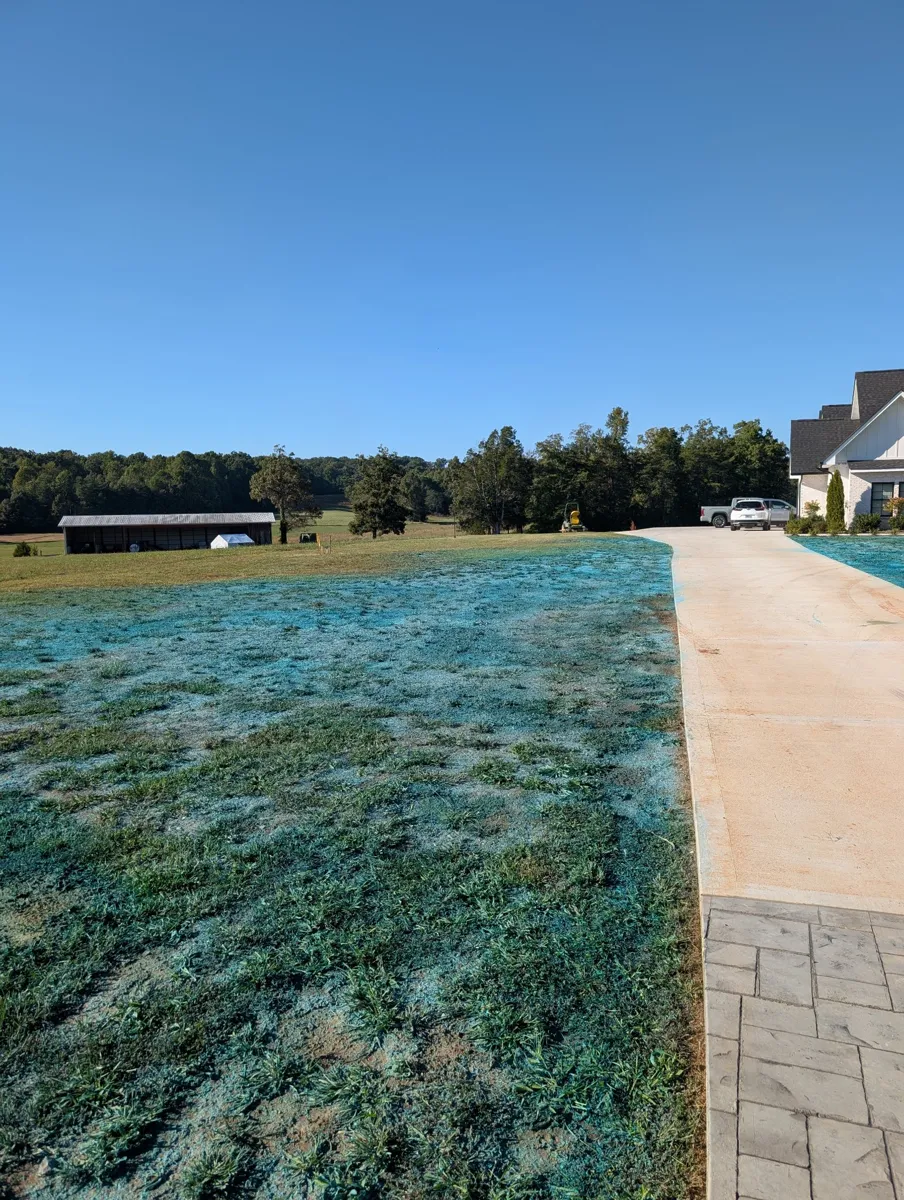
When you need a new lawn in Knoxville, the real choice usually comes down to two options: hydroseeding or sod. Both give you grass. Both work. But they work very differently, and the difference matters a lot when you're standing on red clay in the middle of an East Tennessee summer or staring at a bare new-construction lot in October.
Let's walk through it the way I walk through it with homeowners on the phone.
What sod actually gives you
Sod is instant grass. A truck shows up with pallets of turf that's already grown, a crew rolls it out over your prepared soil, and you have a green lawn by dinner. That instant part is the whole appeal — and it is a real appeal. If you're listing your house in three weeks or you just can't stand looking at dirt, sod solves the problem the same day.
The tradeoffs are straightforward. Sod costs several times more per square foot than seeding of any kind. Those rolls have to stay alive between being cut and being laid, which means the installation schedule has to be tight — a pallet of sod baking in a Knoxville August afternoon is not the same product that left the farm. And the roots still have to decide to grow down into your soil. Sod laid on unprepared red clay can look perfect for a month and then struggle, because the grass was grown on someone else's soil and has to learn yours.
What hydroseeding actually gives you
Hydroseeding sprays a slurry of seed, mulch, fertilizer, and a tackifier over your soil. Nothing looks like a lawn on day one — it looks like green paper. That is the hardest part for people to accept, and I get it. You're paying for a lawn that looks like wet cardboard for the first week.
But what you're buying is grass that germinates in place, in your actual soil, with its roots anchored from day one. A hydroseeded lawn doesn't have to adapt to your ground the way sod does, because it was born there. The mulch holds moisture against the seed through those first critical days, which is a genuine advantage in East Tennessee clay that can crust over and shed water after a hard rain.
And then there's the price. For Knoxville hydroseeding, one tank covers up to 2,500 square feet at $700, and larger properties run about $6,000 per acre. Compare that against sod quotes for the same ground and the math is not close.
How the two compare on the things that actually matter
Timing. Sod can go down almost any time the ground isn't frozen, and you see results immediately. Hydroseeding needs seed-to-soil contact and consistent moisture, which is why fall is the sweet spot around Knoxville — the seed overwinters and comes on strong in year one, while spring plantings have to race summer heat. If you're reading this in early October, you're sitting in the best window of the year for Knoxville hydroseeding.
Root strength. This is where hydroseeding usually wins long-term. Seed-germinated grass grows its root system directly into your soil profile. Sod has to knit its farm-grown root layer into your dirt, and that seam can stay a weak point for a season or more, especially over compacted construction fill.
Coverage area. For a small front yard, the price gap between sod and hydroseeding is noticeable but not shocking. For an acre — or the two or three acres a lot of Knoxville-area lots run — sod becomes an enormous bill. That's where hydroseeding is not just the cheaper option, it's often the only practical one. A hydroseed truck can spray a hillside, a ditch bank, or an awkward lot corner that no sod crew wants to piece turf over.
Appearance early on. Sod wins, no contest. A hydroseeded yard needs patience — germination in roughly a week to ten days in good conditions, a fill-in lawn in about a month, a lawn you're proud of in a season. If you need the yard to look finished this weekend, seed of any kind is not your answer.
Erosion. Both beat bare dirt. But hydroseeded mulch with tackifier locks itself onto slopes, which is why it's the go-to for erosion control on graded lots and steep Knoxville hillsides. Sod on a steep slope is heavy, slippery to install, and can slide before it roots.
The honest answer for most Knoxville homeowners
If you have a small, highly visible area and money isn't the concern, sod is fine. If you have a new build with an acre of graded clay, a hillside that washes every storm, or you just want the most lawn per dollar — hydroseeding is the better call. That's most of the jobs we spray.
One thing I tell people regardless of which route they take: prepare the soil. Loosen it, grade it, give the roots something to work with. Sod over compacted clay fails. Seed over compacted clay struggles. The ground underneath matters more than which grass delivery method you pick.
And if you go the hydroseeding route, here's our standing promise: if a small spot doesn't take for any reason, we come back and re-spray it free. No arguments, no fine print. That's part of East Tennessee hydroseeding done right — the job isn't done until the grass is up.
Want a number for your yard? Call (423) 358-2317 or request a quote and we'll size it up — one tank covers up to 2,500 square feet, and we'll tell you straight whether your lot is a one-tank job or an acre-rate one.
Want it handled start to finish? The East Tennessee hydroseeding crew does the prep, the spray, and the follow-up.
Every yard is different. Get a free quote from East Tennessee hydroseeding before you decide.