Hydroseeding Steep Slopes in Knoxville: How Seed Stays Put on a Hill
A steep slope is where regular grass seed goes to die. You spread it, a hard rain comes through, and half your seed ends up in the ditch at the bottom of the hill. That's why so many Knoxville hillsides sit patchy and bare — the ground is fine, the seed just never stays in place long enough to sprout.
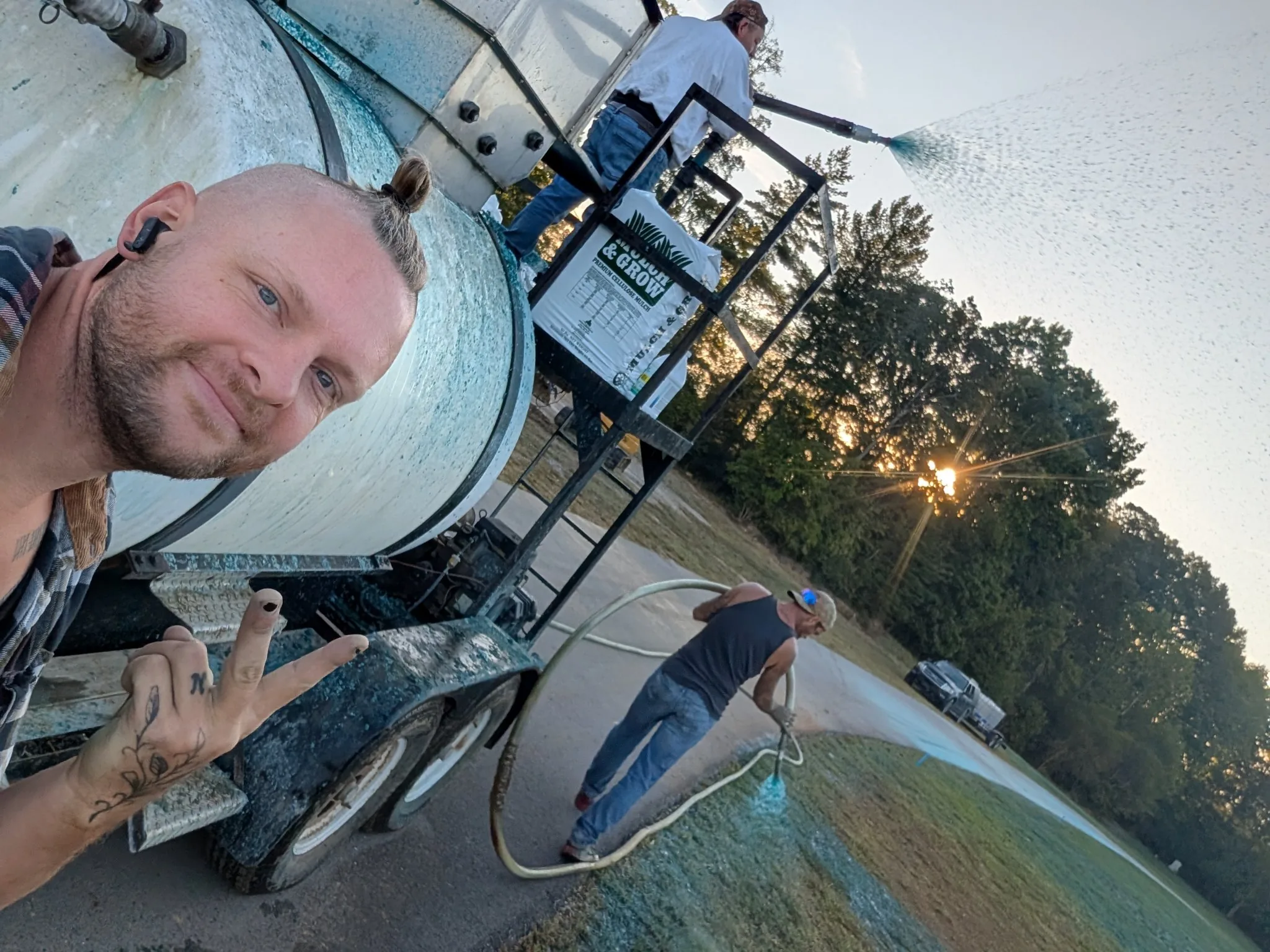
Hydroseeding exists for exactly this problem. The seed doesn't go on alone. It goes on suspended in a thick slurry of water, wood-fiber mulch, and fertilizer, sprayed out of a hose under pressure. When that mixture hits the slope, the mulch fibers mat together and cling to the soil, holding the seed right where it landed. It dries into a thin blanket that resists washout while the seed underneath does its work.
East Tennessee hills make this more than a nice-to-have. Our slopes shed water fast, especially new ones — construction grades, driveway cuts, backyard slopes where the builder left the soil raw. One solid thunderstorm can carve rills down a bare bank and carry off a season's worth of effort. The hydroseed mulch layer acts as instant erosion control from day one, and by the time it breaks down, roots have taken over the job of holding the soil.
There's a real limit to know about. Hydroseeding can handle a working slope — the kind you'd think twice about mowing with a riding mower. If a hill is so steep you can't walk it safely, seed alone won't fix it no matter how you apply it; that slope needs grading work or a retaining wall before anything green is going to stick. Most of the slopes we spray in Knoxville are right in the middle ground: too steep to seed by hand, perfectly fine for a hydroseeder.
The spray technique changes on a hill. We work from the top down, and on steeper ground we put the mulch down heavier — a thicker blanket grips better and buys more protection against a sudden downpour. We also pick the seed blend with the slope in mind. Tall fescue is the workhorse in Knoxville for a reason: deep roots, heat tolerance, and it holds a bank well once it's established. On rougher ground where you want coverage more than a showpiece lawn, a hardier blend gets the job done faster.
Watering a slope takes a little more care than watering flat ground. Short, frequent sessions are the rule — just enough to keep the mulch blanket damp without sending water sheeting down the face. A quick morning soak and a quick evening soak beats one long blast that washes seed downhill. The mulch helps here too: it drinks up the water and releases it slowly instead of letting it run.
Red clay, which underlies half of Knoxville, actually works in your favor on a slope once you understand it. Clay packs tight and sheds water, so unprepared clay banks erode fast. But hydroseeded into loose, roughened topsoil over that clay, the seed has something to root into while the clay below holds moisture near the surface. We like to see the slope roughed up before we spray — smooth graded clay is a slip-and-slide for anything you put on it.
One thing people ask about: the mulch layer can look a little lumpy on a steep face where it drapes over uneven ground. That's cosmetic. It flattens as it breaks down and the grass pushes through it. What matters is that the seed is still sitting on the soil where it was sprayed, which is the whole point of the system.
Cost-wise, slopes are priced the same as flat ground in our book: $700 per tank, with one tank covering up to 2,500 square feet, and $6,000 per acre for larger properties. A hillside lot often lands in the one-to-two-tank range, which surprises people — they assume a specialty application costs more. The spray is the same spray; we just point it uphill.
And the guarantee holds on slopes too: if a small spot doesn't take, we come back and touch it up free. Hillsides sometimes need one follow-up patch where a drain swale concentrated the runoff, and we'd rather fix that on our dime than have you staring at a bare streak all year.
Timing still favors fall in Knoxville. Seeding a slope in September or October gives the grass months of cool weather to root deep before summer heat tests it. Fall seed overwinters and comes up stronger in year one — on a hill, that strong first-year root system is the difference between a bank that holds and one that slips.
If you've got a slope that's been fighting you, give us a call at 423-358-2317 or request a quote through our Knoxville hydroseeding site, easttnhydroseeding.com. We'll take a look at the grade, tell you straight whether it's a spray job or needs earthwork first, and give you a firm price. Our East Tennessee hydroseeding work is done by our own crew, and our East Tennessee hydroseeding guarantee — free return visits if a spot doesn't take — applies to every slope we spray.
Ready for a lawn without the guesswork? See Knoxville hydroseeding from the East TN Hydroseed crew.
Want it handled start to finish? The East Tennessee hydroseeding crew does the prep, the spray, and the follow-up.
Every yard is different. Get a free quote from East Tennessee hydroseeding before you decide.