Hydroseeding Sloped Backyards in Corryton and Gibbs: Keeping Grass on the Hill
If you live in Corryton or Gibbs, there is a fair chance your backyard is not flat. Northeast Knox County rolls, and plenty of homes sit on lots where the back door opens onto a slope that drops toward a creek, a pasture, or the next property down. Growing grass on that kind of ground frustrates people for a simple reason: everything you put on a hill, seed, soil, and water included, wants to travel to the bottom of it.
Dry seeding a slope is where most homeowners learn this the hard way. You rake, you spread seed, you cover it with straw if you are diligent, and then an East Tennessee downpour rearranges all of it in twenty minutes. The top of the hill ends up bare, the bottom ends up with a thick green stripe, and the straw ends up against the fence. It is not a matter of effort. It is a matter of using a method that was not built for the slope you own.
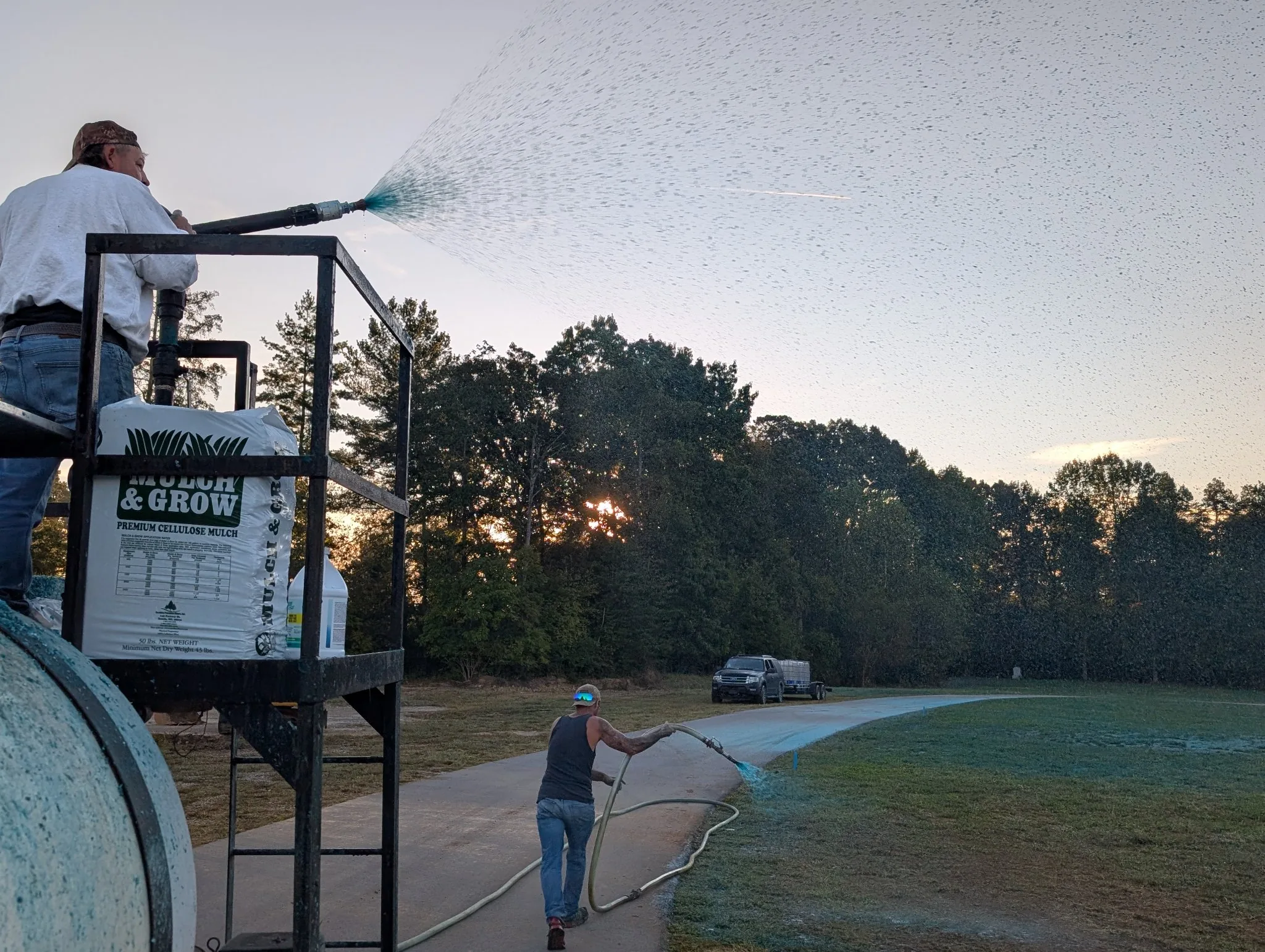
Hydroseeding was practically designed for this problem. The seed is sprayed in a wet mulch mix that lands on the slope and stays there, coating the surface instead of sitting loose on top of it. The mulch holds moisture around the seed, which matters doubly on a hill because slopes shed water and dry faster than flat ground. It also gives you a visible green layer, so any thin coverage shows immediately rather than revealing itself as a bare stripe three weeks later.
Prep on a slope needs a realistic eye. Loose, freshly dumped fill will not hold grass well, and a slope that is actively eroding in gullies needs those channels addressed before seed goes down, or the same channels will cut through the new stand. Light roughing of the surface helps the mix key in. On a very steep bank, the honest conversation may be about what portion is growable lawn and what portion would serve you better as a planted bank or ground cover, because not every angle of hillside wants to be mowed turf.
Watering a sloped new lawn takes a lighter touch. Long, heavy watering runs off a hill before it soaks in, carrying your patience with it. Short cycles with rest time between them let water sink in where it lands. Start at the top of the slope when you check coverage, because the top dries first and germinates last. Many Corryton and Gibbs homeowners on wells also appreciate the short-cycle approach, since it is easier on a pump than marathon sprinkler sessions.
Cost for slope work follows the same simple pricing as everything else we do. It is $700 per tank, with one tank covering up to 2,500 square feet, and $6,000 per acre for larger properties. A sloped backyard is usually measured honestly by its actual surface, and while a steep or difficult hill can affect a quote, there is no separate mystery slope fee sprung on you after the fact. You can review the service basics at Knoxville hydroseeding before measuring your own hill and doing the math.
The payoff for getting a slope covered is bigger than looks. A grassed hill holds its own soil, keeps mud off the patio and the dog's feet, and stops the slow loss of your yard into the low ground below. Roots are doing quiet engineering work every day once the stand is established. And if a small section near the top lags behind, we offer free return visits if a small spot does not take, which is a common and fixable outcome on steep ground.
If your Corryton or Gibbs backyard has been winning its fight against grass seed, change methods instead of repeating the same spring ritual. Call 423-358-2317 or request a free quote, and we will look at your slope and give you a straight answer on what hydroseeding can do there.
Want it handled start to finish? The East Tennessee hydroseeding crew does the prep, the spray, and the follow-up.
Every yard is different. Get a free quote from East Tennessee hydroseeding before you decide.