Hydroseeding Pasture in Tennessee: Why Fall Is the Best Time to Plant
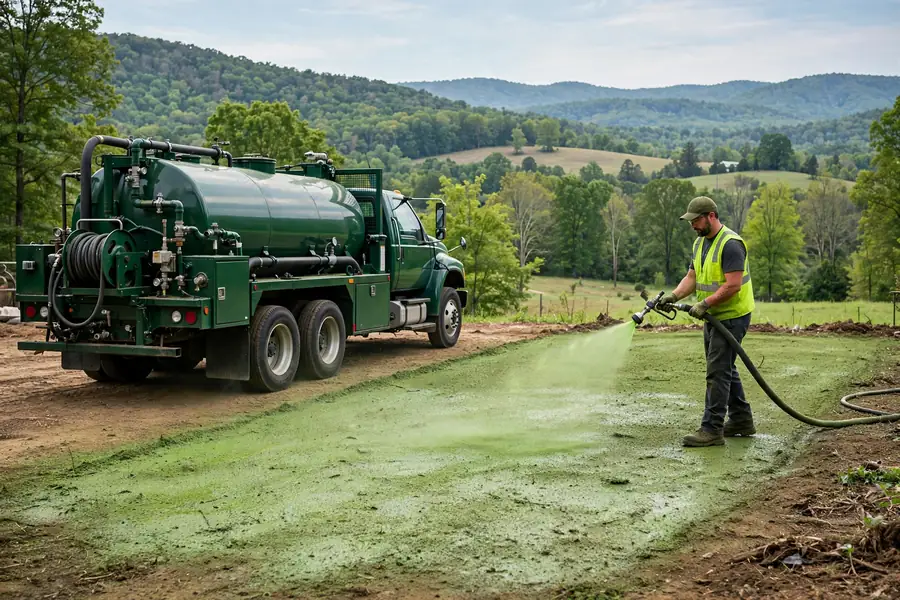
If you own a few acres in Tennessee and the pasture has gone patchy, rutted, or bare in spots, you've probably wondered whether hydroseeding is only for house lots. It isn't. Hydroseeding pasture ground works on the same principle as a lawn, just scaled up: a slurry of seed, mulch, fertilizer, and water gets sprayed evenly across the land, and the mulch layer holds everything in place while the seed germinates. For landowners with five, ten, or fifty acres, that's a lot more practical than broadcasting dry seed and hoping for rain.
Fall is the best time to do it. Tennessee's cool-season pasture grasses — tall fescue, orchardgrass, clover blends — germinate best when soil temperatures are between 50 and 65 degrees, which is exactly where October and early November land in most of the state. Fall-seeded pasture gets two advantages spring seedings don't: roots develop through the cool, wet winter instead of fighting summer heat, and the new stand comes up thick in March instead of playing catch-up. As any Knoxville hydroseeding crew will tell you, seed planted in fall overwinters and produces noticeably better grass in year one. That applies to a ten-acre pasture just as much as to a backyard.
The price math favors hydroseeding at acreage scale. Dry-seeding a pasture yourself means buying seed in bulk, renting a drill or spreader, and usually paying for a separate fertilizer pass — plus whatever washout you lose to the first hard rain. For larger properties we charge $6,000 per acre, which covers the spray, the seed, and the mulch blanket in one pass. On ground where seed has to fight red clay or a worn-thin topsoil layer, that mulch blanket matters: it keeps seed from washing into the low spots and holds moisture against the soil during the two or three weeks it takes fescue to establish. Landowners who've tried broadcasting into a bare field know the frustration of watching the first October downpour rearrange their seed order. The slurry stays where it's put.
Soil prep is still worth doing, though the bar is lower than for a show lawn. You don't need the ground laser-level for pasture work, but you do need decent seed-to-soil contact. Knock down the rough spots, drag or disk any hardpan ruts, and pull back encroaching brush so the spray reaches the soil. If the pasture has been grazed down to stubble, let it rest a couple of weeks so there's a little stubble for the mulch to key into — bare, packed dirt is the hardest thing to seed. A soil test through the county extension office is cheap insurance; fescue likes a pH in the low sixes, and lime takes months to work, so fall seeding gives that adjustment time to settle in.
One question that comes up a lot: will the animals eat it before it grows? Keep livestock off new seedings until the stand is established — usually six to eight weeks in fall, when growth slows. Temporary fencing or a simple electric strand is enough for most fields. Once the grass has a couple of grazing-height inches and the roots are set, it can handle light grazing. Overgrazing a brand-new stand in its first winter is the fastest way to lose it, so plan the rotation with the seeding in mind.
For East Tennessee hydroseeding on larger tracts, access is another practical question. The tank trucks need to reach the field, and each tank covers a lot of ground, so a pasture job usually means multiple tanks and a water source plan. We handle that on every large-property job — it's routine. What we can't spray is standing brush or deep mud, so fields with a drive-in gate and reasonably firm ground are ideal.
A lot of landowners hydroseed pasture in fall and then watch it come on strong in March without a single return trip. But if a low corner or a gate area doesn't take — a small bare spot where water pooled or livestock got through the fence — we come back and re-spray it free. That's true on a quarter-acre lawn and it's true on acreage. Most of our East Tennessee hydroseeding work is lawns and new construction, but pasture seedings have quietly become one of our favorite jobs: big, satisfying fields that go from red dirt to green grass in a season.
If you've got bare pasture and October weather, this is the window. Call (423) 358-2317 for a free quote, or request a quote online and we'll take a look at your field.
Ready for a lawn without the guesswork? See Knoxville hydroseeding from the East TN Hydroseed crew.
Want it handled start to finish? The East Tennessee hydroseeding crew does the prep, the spray, and the follow-up.
Every yard is different. Get a free quote from East Tennessee hydroseeding before you decide.