Hydroseeding for Erosion Control in Tennessee: Stopping a Washing Hillside
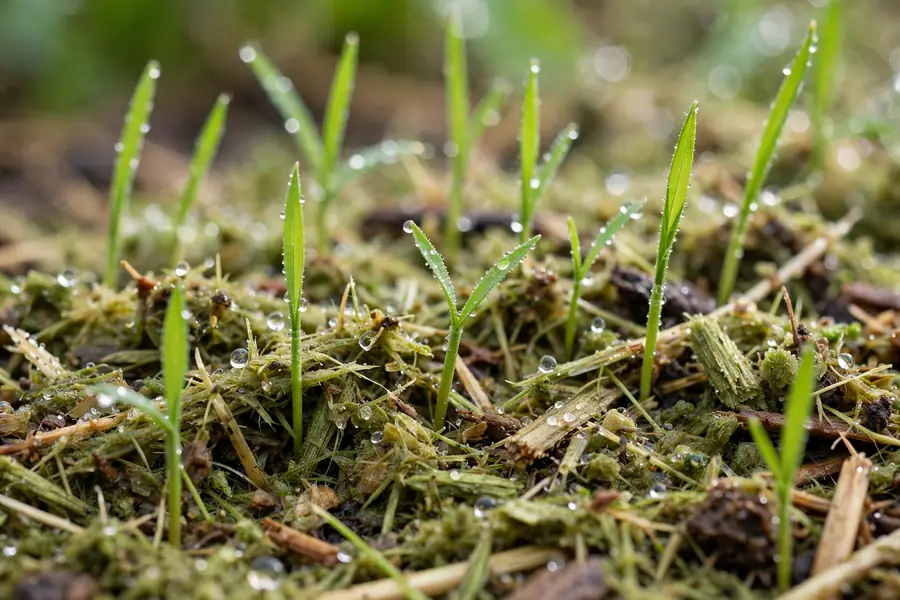
If you've got a slope in Knoxville that's washing out every time it rains, you already know the problem isn't just ugly. Bare red clay on a hillside loses soil fast, and once the gullies start, throwing straw on it won't fix anything. This is the job hydroseeding was built for. Erosion control hydroseeding in Tennessee works because the slurry itself does two things at once: it plants the seed, and it glues everything in place until the grass can take over.
Here's how it works in practice. The mix that comes out of the hose is seed, wood fiber mulch, water, and a tackifier, which is basically a natural glue that holds the mulch blanket together. Sprayed onto a slope, it forms a green crust that sticks to the soil surface. When a hard East Tennessee thunderstorm hits, that crust takes the beating instead of the bare clay underneath. Water runs over it and through it slowly instead of carving channels in the dirt. And because the seed is locked inside that mulch blanket, it can't wash downhill the way hand-spread seed does.
That stuck-in-place part is the whole advantage over dry seeding or straw. Straw on a Knoxville slope in a summer storm just becomes confetti. Seed spread dry has no anchoring at all — the first heavy rain carries it to the bottom of the hill, where you get a thick green strip at the base and bare clay everywhere else. Any Knoxville hydroseeding crew that does slope work will tell you the same thing: the mulch mat is the difference between a seed job and an erosion job.
There's a second half to the equation, which is the grass itself. The seed mix in the slurry is chosen to root deep and hold soil long after the mulch has broken down. Fescue is the workhorse here — its roots knit the top few inches of soil into a living net that slows water and keeps the slope from slumping. That matters in a place like Knoxville, where we get intense spring downpours and a heavy red clay subsoil that sheds water instead of absorbing it. The mulch gets you through the first six weeks. The grass takes over from there.
Timing matters for erosion work more than for flat lawns. If a slope is bare and storm season is coming, the fastest thing you can do is get it sprayed. Fall is the sweet spot in our part of Tennessee — seed planted in October and November germinates, then goes dormant and overwinters, so you head into spring with roots already in the ground and a full growing season ahead. An East Tennessee hydroseeding crew can usually get a slope sprayed in a day, and you'll see sprouts inside two weeks if the weather cooperates.
That said, be honest with yourself about what a slope can do. Hydroseeding handles grades that would defeat every other seeding method, but it is still seed on a slope — it needs the soil prepped right (lightly roughened, not graded smooth like a ski jump) and it needs watering for those first few weeks. After a major storm, it's smart to walk the slope and check for thin spots. If a small spot doesn't take, it comes back out and gets touched up — with our work, free return visits are part of the deal, because erosion spots are exactly where you don't want a bare patch coming into winter.
Cost-wise, erosion control spraying prices just like a regular hydroseeding job: $700 per tank for areas up to 2,500 square feet, and $6,000 per acre for larger properties. Most residential slopes in Knoxville fall in the per-tank range, since a steep hill behind a new build isn't usually that big — it's just that nobody can seed it by hand. For bigger commercial or development slopes, the per-acre price is where East Tennessee hydroseeding starts to beat straw-and-seed or rolled erosion blankets by a wide margin, mostly because one crew with a hose covers ground fast.
One thing to sort out before the hose arrives: drainage. If water is sheeting across the top of the slope from a roof, driveway, or uphill neighbor, no seed job will fix that — you need gutters or a drain to redirect the water first. A good contractor will tell you that straight instead of spraying a slope that's getting blasted every rain. Get the water under control, get the grade roughened up, and then the hydroseeding does its job.
If you've got a bank, a cut slope, or a bare new-construction hill in the Knoxville area that's moving downhill a little more every storm, now is the right time to lock it down. Fall seeding overwinters for better grass in year one, and the slope that gets sprayed this month is the slope that isn't in your driveway next spring.
Call (423) 358-2317 for a free quote, or request a quote online — we'll come take a look at the slope and tell you honestly whether hydroseeding is the right fix for it.
Ready for a lawn without the guesswork? See Knoxville hydroseeding from the East TN Hydroseed crew.
Want it handled start to finish? The East Tennessee hydroseeding crew does the prep, the spray, and the follow-up.
Every yard is different. Get a free quote from East Tennessee hydroseeding before you decide.