How to Water a New Hydroseed Lawn in Knoxville
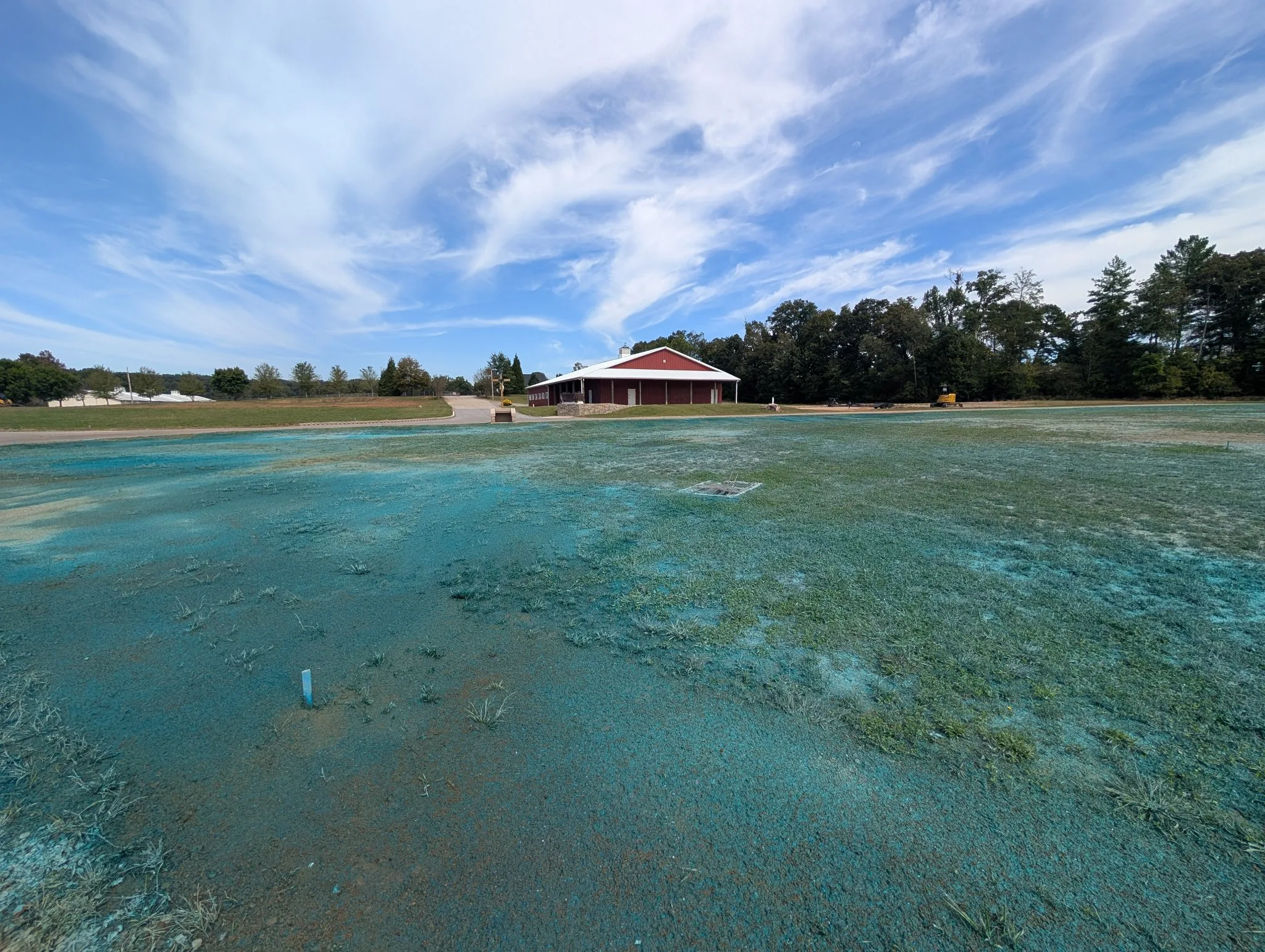
Water is the whole game with hydroseed. The spray mulch holds the seed in place and keeps it damp, but once it's down, keeping it watered correctly is the difference between a thick lawn and patchy spots. The good news: watering a hydroseeded lawn isn't complicated. It's a simple routine, and it's a lot easier than watering dry seed you spread yourself — the mulch layer holds moisture for you between waterings.
For the first two to three weeks, the seed bed needs to stay damp at all times. Not soaked, not flooded — damp. Light, frequent watering is the rule. Two to three short watering sessions a day is usually the sweet spot for Knoxville yards: once in the morning, once around midday, and once in the late afternoon. Each session only needs to moisten the mulch layer, which takes a few minutes per zone. The mulch should look dark and moist, never dried out and pale.
Morning is the most important watering of the day. Watering before the heat sets in lets the moisture soak in instead of evaporating off the surface. In a Knoxville summer, a seed bed that goes into a 90-degree afternoon dry is a seed bed that's going to lose germination. If you can only manage one watering a day, make it early morning — but three short ones is the real answer.
Here's the mistake we see most often: watering hard instead of watering often. A long, heavy watering washes seed and mulch downhill, especially on slopes. That's why a gentle sprinkler or an oscillating setting on a light spray matters more than volume. You want the mulch layer to drink, not the yard to run. Puddles and standing water are a sign to back off — they'll move seed out of place and leave thin spots.
After germination — usually around day 10 to 14 for the fescue and rye mixes we use in East Tennessee — you can start stretching the watering out. Move to one deep watering a day, then to every other day by week four or five. The goal is to train the new roots to grow down looking for water instead of sitting shallow at the surface. Deep, less-frequent watering builds a lawn that holds up in a dry August; shallow daily watering builds a lawn that sulks the minute you skip a day.
Fall seeding — which is the best window in our part of the state — makes the watering job noticeably easier. Cooler air and regular rain do part of the work for you. A fall-seeded lawn still needs attention through germination, but you fight evaporation far less than in June. A seedbed put down in October overwinters and comes back stronger in spring, which is why we tell folks the fall window is worth waiting for. If you're on the fence about timing, read through the timing advice on our sister site at Knoxville hydroseeding — the fall case is hard to beat for new lawns.
Rain counts as watering, but don't assume a quick shower did the job. A five-minute summer rain wets the surface and evaporates by noon. After any rain, check the mulch — if it's dark and damp, you're fine; if it's light and dry, run the sprinkler anyway. On the flip side, a multi-day soaker means you can skip your sessions. A simple soil check takes thirty seconds and saves you from both drying out and overwatering.
One thing to watch: don't mow or walk on the new grass until it's at least three to four inches tall. Foot traffic on young seedlings compacts the soil and snaps the new roots. When it is time to mow, keep the mower on a high setting and take no more than a third of the blade off. And hold the fertilizer until the lawn is established — weed control especially needs to wait until after the second or third mowing, since most weed killers will kill young grass too.
We'll always level with you about how the seed takes. If a small spot doesn't come in — thin shade, a low spot that stayed too wet, whatever the reason — we come back out and re-spray it at no charge. Our spray covers up to 2,500 square feet at $700 per tank, with $6,000-per-acre pricing for bigger jobs, and the free return visits are part of the deal. No fine print.
So: light and often for the first three weeks, deep and less often after that, morning first, and don't wash it downhill. Follow that and the seed does the rest. Call (423) 358-2317 or request a quote on this site and we'll get your lawn sprayed in the right window.
Want it handled start to finish? The East Tennessee hydroseeding crew does the prep, the spray, and the follow-up.
Every yard is different. Get a free quote from East Tennessee hydroseeding before you decide.