How Much Water Does New Hydroseed Really Need?
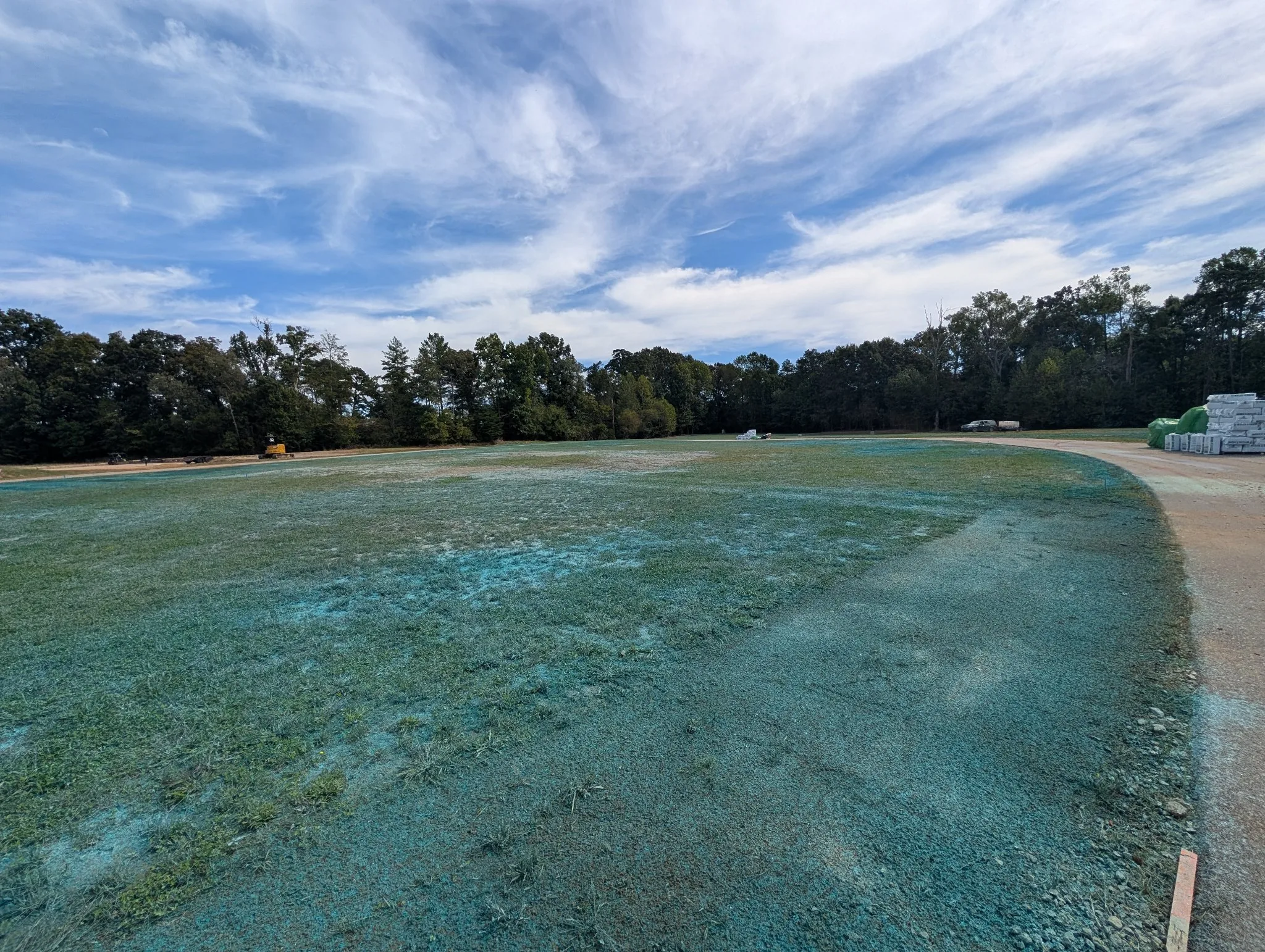
The most common question after a hydroseed job is also the most important one: how much water does this need? The honest answer is that new seed needs to stay consistently damp, not soaked and not dry. Seed that dries out completely after it has started to swell may not recover. Seed that sits in puddles can rot or wash. In Knoxville, where a sunny October day can still push into the seventies and a clay yard can hold water in one spot and shed it in another, that middle ground takes a little attention for the first few weeks.
For the first ten to fourteen days, plan on light watering two to three times a day. A typical starting point is about ten to twenty minutes per zone each time, depending on your sprinkler output, sun exposure, and slope. You are not trying to soak deep into the soil yet. You are keeping the mulch layer and the top half inch of soil moist, like a wrung-out sponge. Early morning and late afternoon are good windows. A midday pass helps on hot, windy days when the surface dries fast, especially on south-facing slopes around Farragut and West Knoxville.
How do you know if you have it right? Walk out and look closely. The mulch should look damp and dark, not pale and crusty, and not shiny with standing water. Press a finger into the soil under the mulch. It should feel cool and moist. If the surface dries to a light color within an hour or two of watering on a mild day, add a short cycle rather than making each cycle much longer. Short and frequent beats long and rare at this stage, because long runs on East Tennessee clay tend to run off before they soak in.
Once you see even germination, usually in seven to fourteen days depending on the seed blend and temperature, you can start stretching the schedule. Move toward one deeper watering a day, then every other day as roots reach down. The goal flips over time. Early on you water for the seed at the surface. Later you water to encourage roots to chase moisture deeper into the soil, which is what helps a lawn handle a dry July in Tennessee without constant babysitting. Cutting back too fast is a common mistake, so taper over a week instead of stopping the frequent cycles all at once.
Rain counts, but read it carefully. A slow, steady rain that wets the soil is a free watering and you can skip a cycle or two. A quick downpour that runs off hard clay may leave the surface drier than it looks, so check under the mulch afterward. On the other hand, several days of steady rain in a row means you should back off and let the ground breathe. New seedlings in soggy soil are vulnerable, and overwatering in cool fall weather is just as real a problem as underwatering in August.
Slopes and sunny spots need separate attention. Water runs downhill, so the top of a slope in Powell or Halls often stays drier than the bottom even on the same sprinkler zone. If the top looks pale while the bottom is soggy, shorten the runs and add a cycle, or hand-water the dry stretch. Shaded areas under big oaks hold moisture longer and usually need less. Treating the whole yard as one uniform surface is where most watering plans go wrong.
A simple timer makes all of this easier, and it does not need to be fancy. What matters is consistency, including weekends when the routine slips. More detail on what to expect in the first weeks is at Knoxville hydroseeding if you want to read ahead. And remember, if a small spot does not take despite good watering, we offer free return visits to address it, so you are not starting over on your own.
If you are planning a job and want help figuring out whether your water access and schedule can support a new lawn, call 423-358-2317 or request a free quote. We would rather talk through watering honestly before we spray than leave you guessing afterward.
Want it handled start to finish? The East Tennessee hydroseeding crew does the prep, the spray, and the follow-up.
Every yard is different. Get a free quote from East Tennessee hydroseeding before you decide.