Frozen Ground and Frost Heave: What Winter Does to New Seed in East Tennessee
If you seeded late in the fall in Knoxville, winter is not just a quiet waiting period. It is an active season underground, and what happens between December and February explains a lot of what you will see in March. The biggest winter issue for new seed and young grass in East Tennessee is frost heave, and once you understand it, a patchy spring lawn makes a lot more sense.
Frost heave happens when soil freezes, thaws, and freezes again. Water in the soil expands as it turns to ice and pushes up. Then it thaws and settles back down, but not always to the same place. In Knox County we can get a lot of those cycles in a single winter. A week of nights in the twenties followed by a sunny afternoon in the fifties is normal here, especially in open yards in places like Powell, Karns, and Corryton. Each cycle can lift small seeds, tiny roots, and even small clumps of young grass a little bit out of the ground.
That lifting matters because a new grass plant lives or dies on root contact with the soil. When frost pushes a seedling up, its fine roots can be exposed to cold, dry air. The plant may not die right away, but it dries out and struggles when growth tries to restart. You will often see the worst heave damage on bare, wet clay and on north-facing slopes that stay damp and freeze hard. Areas that were already thin, compacted, or low on mulch cover are the most vulnerable.
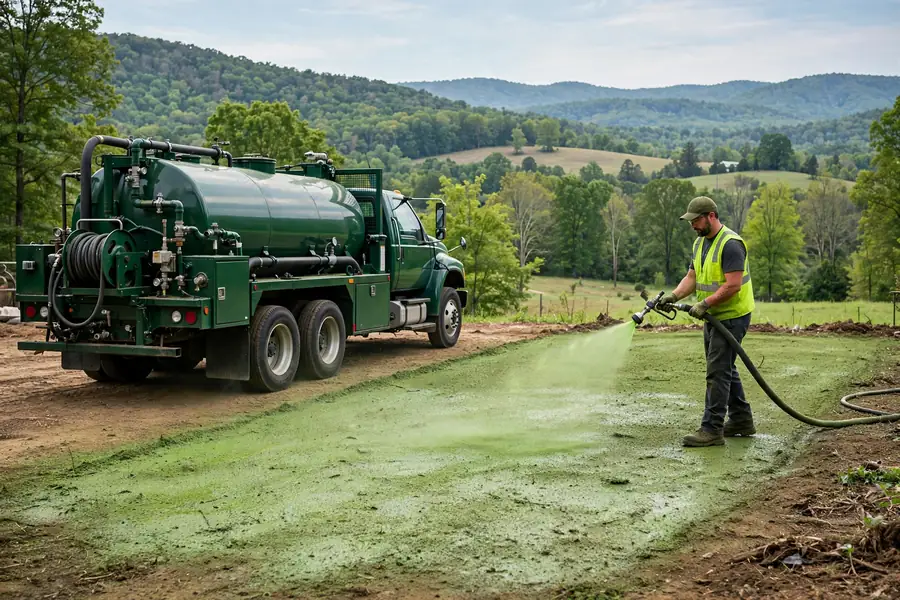
Hydroseeding helps with winter protection compared to dry seed scattered on top of the ground, because the mulch in the slurry holds the seed in place and gives it a little insulation and moisture. It does not make a fall lawn bulletproof, though. If seed went down very late and barely germinated before cold weather, much of it is still sitting close to the surface when the hardest freezes arrive. That is why timing matters so much in East Tennessee. Seed that had time to sprout, root, and get mowed even once or twice before winter goes into the cold in much better shape than seed that was still waking up in November.
So what should you do this winter if you have a young lawn? First, stay off it when it is frozen or soggy. Foot traffic on frosted grass can break brittle blades, and traffic on thawed, muddy ground compacts the soil and tears at shallow roots. Keep dogs to the least fragile area if you can, and avoid parking or storing anything on a new lawn over winter. Second, do not try to fix bare spots right now by throwing more seed onto frozen ground. Seed on top of ice and hard clay will mostly feed birds or wash away in the next rain. Winter is for observing and planning, not for patching.
Also watch your drainage during winter rains. Knoxville winters are wet, and a steady drip from a gutter, a downspout that dumps in one place, or water pooling at the bottom of a slope will undo young grass faster than cold alone. If you see a channel forming or mulch washed into a line, note it. That is the first place to address in spring, before any touch-up work.
When spring comes, give the lawn a fair chance to wake up before you judge it. Grass that looked dead in February can green up from the crown in March once soil temperatures rise. Walk the yard once things dry out, look for areas where seedlings were clearly lifted or washed, and check how much real bare dirt remains. Small thin spots are common after a hard winter, and they are exactly the kind of thing we handle with free return visits if a small spot does not take.
If you are planning a new lawn for spring instead, use winter to your advantage and get the measuring and soil prep done early. You can read more about how the process works at Knoxville hydroseeding and plan a date when the ground is workable, not frozen. For Knoxville yards, pricing is $700 per tank for up to 2,500 square feet, or $6,000 per acre for larger areas, so you can budget the spring fix now.
Worried about what winter did to your seed, or planning ahead for spring? Call 423-358-2317 or request a free quote, and we will talk through what your yard actually needs.
Want it handled start to finish? The East Tennessee hydroseeding crew does the prep, the spray, and the follow-up.
Every yard is different. Get a free quote from East Tennessee hydroseeding before you decide.