Fertilizing a New Hydroseed Lawn: A Simple First-Year Schedule
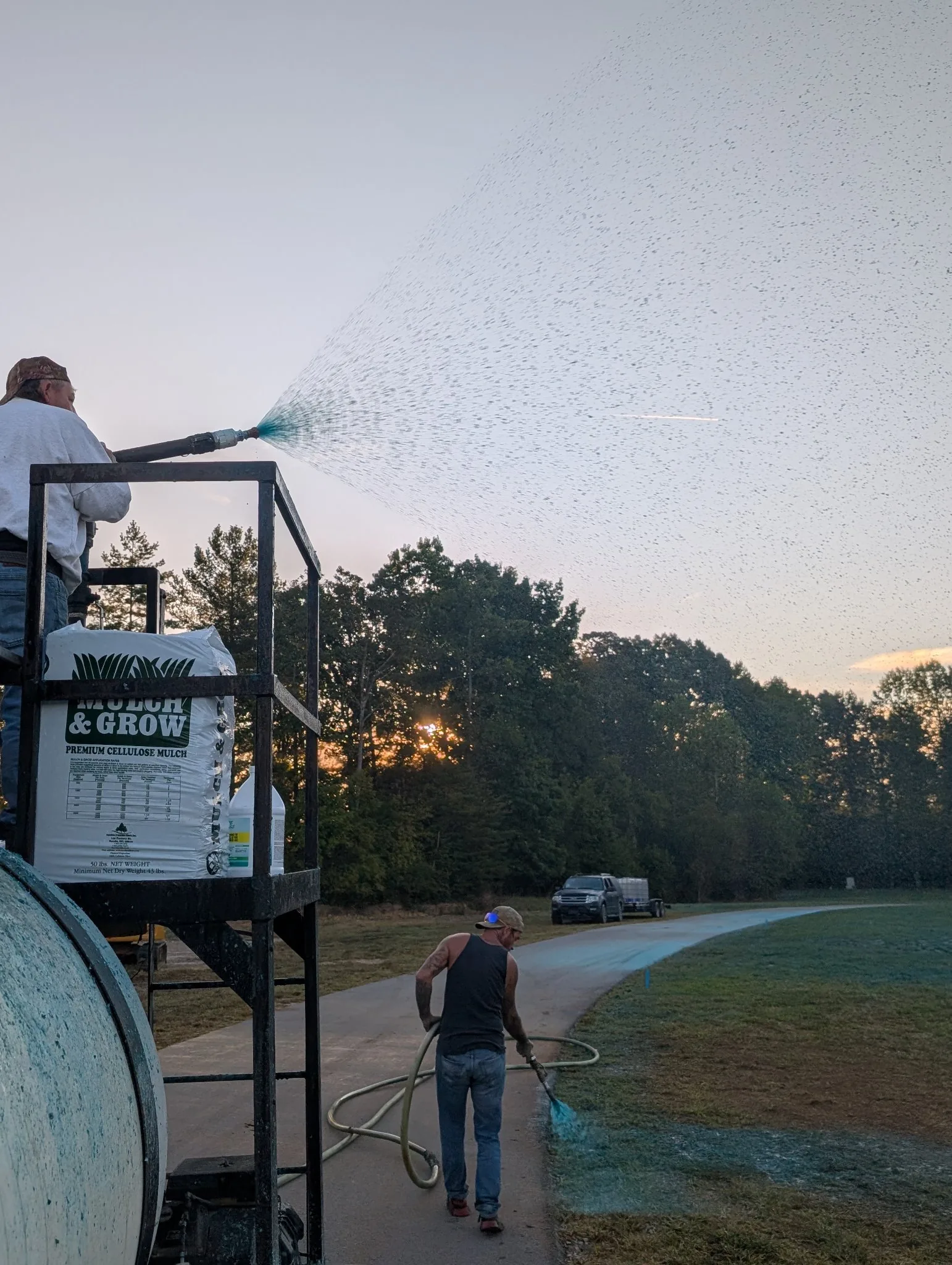
A new hydroseed lawn starts life with food already on board, because starter fertilizer goes into the tank with the seed and mulch. That first feeding is sized for germination and early roots. What happens over the rest of the first year is where homeowners either help the lawn steadily or love it to death with good intentions and a spreader. The truth is that a young East Tennessee lawn wants a few sensible feedings, timed to its growth, and otherwise wants to be left to the unglamorous work of putting roots down into the soil.
Think about the first six to eight weeks as the establishment phase. The starter fertilizer is working, the grass is sprouting and tillering, and your main job is water, not more product. Piling additional fertilizer onto seedlings in this window can push soft, fast top growth at the expense of roots, and a lawn that looks lush at week four but never rooted deeply will show it at the first dry spell. Resist the urge to make it greener faster. In Knoxville's fall season especially, steady growth under cooling temperatures is exactly what a new lawn is built for.
The next feeding generally comes once the lawn has been mowed a few times and is actively growing, roughly six to eight weeks after seeding for a fall job. A balanced feeding at a modest, label-appropriate rate supports the thickening phase, when the lawn is filling in and competing with the last of the season's weeds by shade and density rather than chemicals. If you had a soil test done before seeding, this is where its guidance earns its keep, because feeding to a known need beats feeding to a habit. Lawns on corrected soil use what you give them. Lawns on uncorrected, acidic clay often cannot, no matter how much you spread.
Spring of the first year is the lawn's big growth season, and it is when a thoughtful feeding does the most visible good. Grass that went into winter established will wake up hungry, and a spring application timed to active growth, not to the first warm weekend in February, helps it thicken before summer. The East Tennessee catch is that our spring can fake you out with a warm spell followed by cold, so let the lawn's actual growth, and a few mows under your belt, tell you it is time instead of the calendar alone.
One product deserves a permanent warning label in this schedule. Weed-and-feed has no place around young grass, and it never goes in a hydroseed tank, because the herbicide in it kills germinating seed. Even later in the first year, be conservative about combining weed control with feeding on a lawn that is still establishing. A thick, well-fed lawn is itself the most reliable weed strategy we know, and patience in year one is almost always rewarded in year two, when the lawn can handle a fuller program.
Through all of this, keep the simple measurements in mind. If a small spot does not take during establishment, we offer free return visits to fix it, and a bare spot is a seeding problem, not a fertilizer problem, so do not try to feed your way out of it. Background on what goes into the initial application is at Knoxville hydroseeding if you want to see how the first feeding fits the whole process.
Planning a hydroseed job in the Knoxville area? Pricing is $700 per tank covering up to 2,500 square feet, or $6,000 per acre for larger properties. Call 423-358-2317 or request a free quote, and we will talk through a first-year plan for your yard that is realistic enough to actually follow.
Want it handled start to finish? The East Tennessee hydroseeding crew does the prep, the spray, and the follow-up.
Every yard is different. Get a free quote from East Tennessee hydroseeding before you decide.