Erosion Control on a Budget: Where Hydroseeding Beats Blankets and Matting
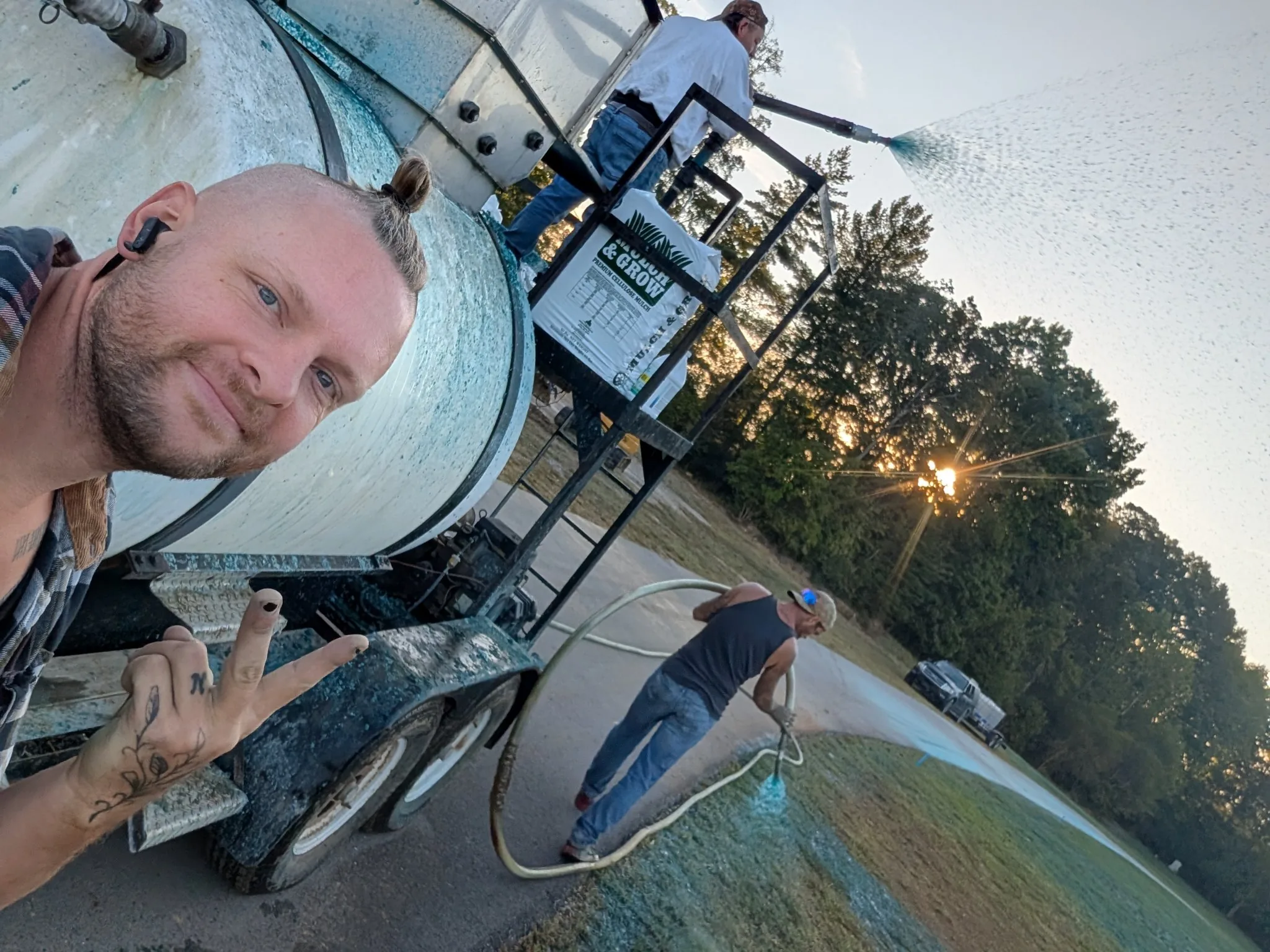
Erosion blankets and matting have their place, but they are not the only way to hold a slope, and they are rarely the cheapest. If you have priced rolled matting lately, you know the material, the staples, and the labor to pin it all down add up fast, especially on a big bank. Hydroseeding takes a different approach. Seed, wood mulch, starter fertilizer, and a tackifier that helps the slurry stick are sprayed on in one pass, and the mulch mat holds the surface while the grass sprouts and roots. On many residential slopes around Knoxville, that one pass costs less and covers ground far faster than unrolling and stapling blankets by hand.
Where hydroseeding usually wins is on moderate slopes, long banks, and wide areas where matting labor gets expensive. A crew can spray a large hillside in a fraction of the time it takes to roll, cut, overlap, and pin blankets, and there are no seams to lift and no edges for water to get under. The slurry also follows the shape of the ground, settling into small dips and ruts that a stiff blanket bridges over. That close contact matters, because erosion often starts in the little low spots where water gathers speed. Cover those spots evenly and you stop a lot of small problems before they become a gully.
There are places where blankets or other hard fixes are still the better call, and it is worth saying so plainly. A very steep cut bank, a channel that carries fast water in every storm, or a slope that is actively sliding needs more than grass seed and mulch. In those spots, matting, stone, or grading work may have to come first, and grass can follow once the ground is stable. Hydroseeding is a strong tool for holding soil that mostly stays put. It is not a substitute for fixing a slope that is failing. An honest look at the grade and the water flow tells you which job you actually have.
Another budget advantage is that hydroseeding is both the erosion cover and the finished lawn in one step. With blankets, you are often paying for material that is only there to protect seed underneath, and on some products you pay again to deal with netting later when you mow. With hydroseed, the mulch breaks down naturally as the grass comes up through it, feeding the soil a little as it goes. There is nothing to remove, nothing to catch a mower blade, and no second seeding step. For a homeowner watching costs, paying once for cover and lawn together is hard to beat.
Pricing is simple enough to compare against a matting quote. We charge $700 per tank, one tank covers up to 2,500 square feet, and larger areas are figured at $6,000 per acre. Measure your bank, do the math, and compare it to the delivered price of rolls, staples, and the hours to install them, including your own hours if you are doing it yourself. You can read more about what is in the tank and how it is applied at Knoxville hydroseeding before you decide. On a wide, moderate slope, the comparison surprises a lot of people who assumed matting was the only serious option.
Whichever route you choose, do not leave bare dirt sitting through winter rains in East Tennessee. Our winter storms can move a surprising amount of soil in a single night, and every gully that forms now is more prep work later. If the slope is a good candidate, hydroseeding it sooner protects the ground and starts roots working for you. And if a small spot washes thin or does not take, we offer free return visits to touch it up, which helps on the tricky edges where erosion likes to start.
Not sure whether your bank needs matting or just a good hydroseed? Call 423-358-2317 or request a free quote, and we will look at the slope and give you a straight answer, even if the answer is that you need more than seed.
Want it handled start to finish? The East Tennessee hydroseeding crew does the prep, the spray, and the follow-up.
Every yard is different. Get a free quote from East Tennessee hydroseeding before you decide.