Dormant Seed Is Not Dead Seed: Patience Through January
It takes a little faith to look at a brown, quiet yard in January and believe there is a lawn in there. Homeowners who had seeding done late in the fall, or who chose dormant seeding on purpose, often call in the middle of winter worried that nothing is happening and that the seed must have failed. Take heart from how grass seed actually works. Seed does not need much to stay alive through an East Tennessee winter. It needs to stay in place, stay in contact with soil, and wait. Cold does not kill sound seed sitting in the ground. In many cases the seed is doing exactly what it is supposed to do, which is nothing at all until the soil warms enough to trigger germination.
Dormant seeding is a real technique, not an excuse. When seed goes down after the soil is too cold to germinate, it lies dormant through winter, and the freeze and thaw cycles actually work it gently into the soil surface, improving the seed-to-soil contact that germination depends on. Then, at the very first stretch of warm soil in late winter and early spring, that seed is already in position and sprouts ahead of seed spread later by hand. Farmers and turf managers have used winter's patience for generations. The lawn is not behind schedule.
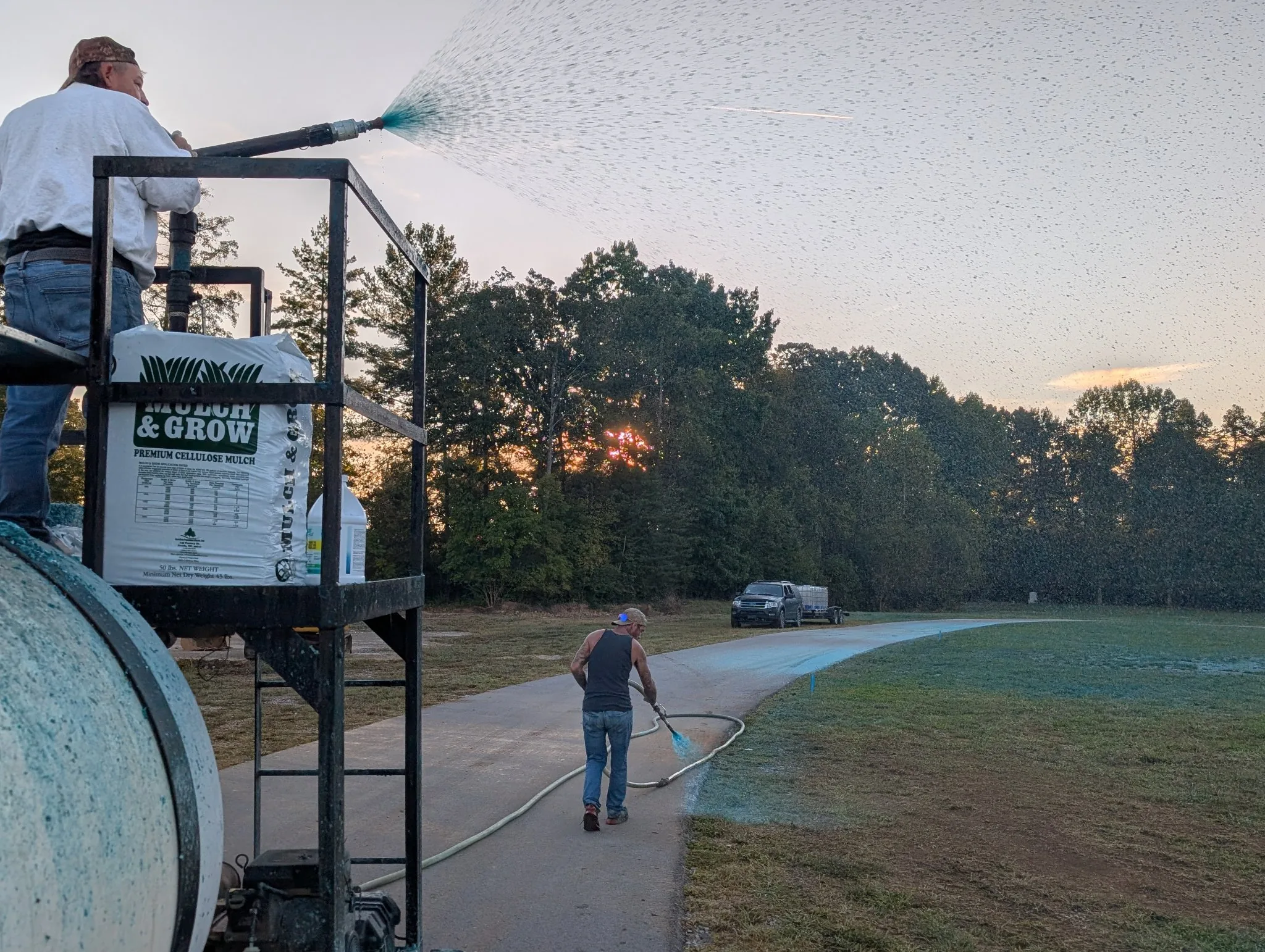
What can actually hurt dormant seed is not cold but movement and exposure. A hard winter rain on a bare slope can wash seed downhill before it ever gets its chance, which is one reason hydroseeding suits dormant work: the mulch mat and tackifier hold the seed where it was sprayed through winter weather far better than dry seed scattered on frozen ground. Foot traffic churning a muddy dormant area, or a winter project that tears across it, can also undo the placement. Otherwise, the main winter threat is simply doubt, the urge to reseed in February because January looked empty. Reseeding over dormant seed that was fine all along wastes money and can crowd the spring stand.
There are limits to the patience we are preaching. Seed that went down without soil contact, scattered over thick thatch or deep loose chips, may indeed fail, because winter waiting cannot fix a seed that never touched ground. Seed left from last spring that never germinated through a whole warm season is a different story from seed waiting out one winter. And ground where the seed visibly washed away in a December storm is not dormant, it is gone, and it should be resprayed in spring. If the placement was good and the mulch is still visibly holding on the soil, though, the odds are strongly in your favor. Look for the mulch, not for green, when you inspect a dormant lawn in January.
While you wait, there are useful things to do. Keep leaves from matting over the seeded area, since a wet leaf blanket smothers the surface and hides what is happening underneath. Plan your spring watering setup now, because dormant seed that sprouts in a dry March spell will want moisture right away. On properties where a bank is part of the picture, winter is also a fine time to study how water moves across your ground and whether a bigger fix from retaining wall contractor in East Tennessee belongs in the plan before spring. And read up on the dormant approach and the spraying process at Knoxville hydroseeding so you know what to expect when the first green threads appear.
Come the first warm weeks, watch the area closely rather than on a schedule from the calendar. Germination follows soil temperature, not the date, and a sunny slope will wake before a shaded hollow on the same property. When sprouts come, they will look thin and fragile at first, and that is normal for every new lawn, dormant-seeded or not. Water lightly if the weather turns dry, keep traffic off, and let it thicken into spring. Our pricing, when spring touch-ups or new areas come up, stays at $700 per tank covering up to 2,500 square feet, or $6,000 per acre for larger ground. And if a small spot truly does not take once spring growth is underway, we offer free return visits to touch it up.
Looking at a quiet winter yard and wondering whether your seed made it? Call 423-358-2317 or request a free quote, and we will help you judge what is dormant, what is fine, and what actually needs attention come spring.
Want it handled start to finish? The East Tennessee hydroseeding crew does the prep, the spray, and the follow-up.
Every yard is different. Get a free quote from East Tennessee hydroseeding before you decide.