Does Hydroseeding Work on Red Clay? What Knoxville Homeowners Should Know
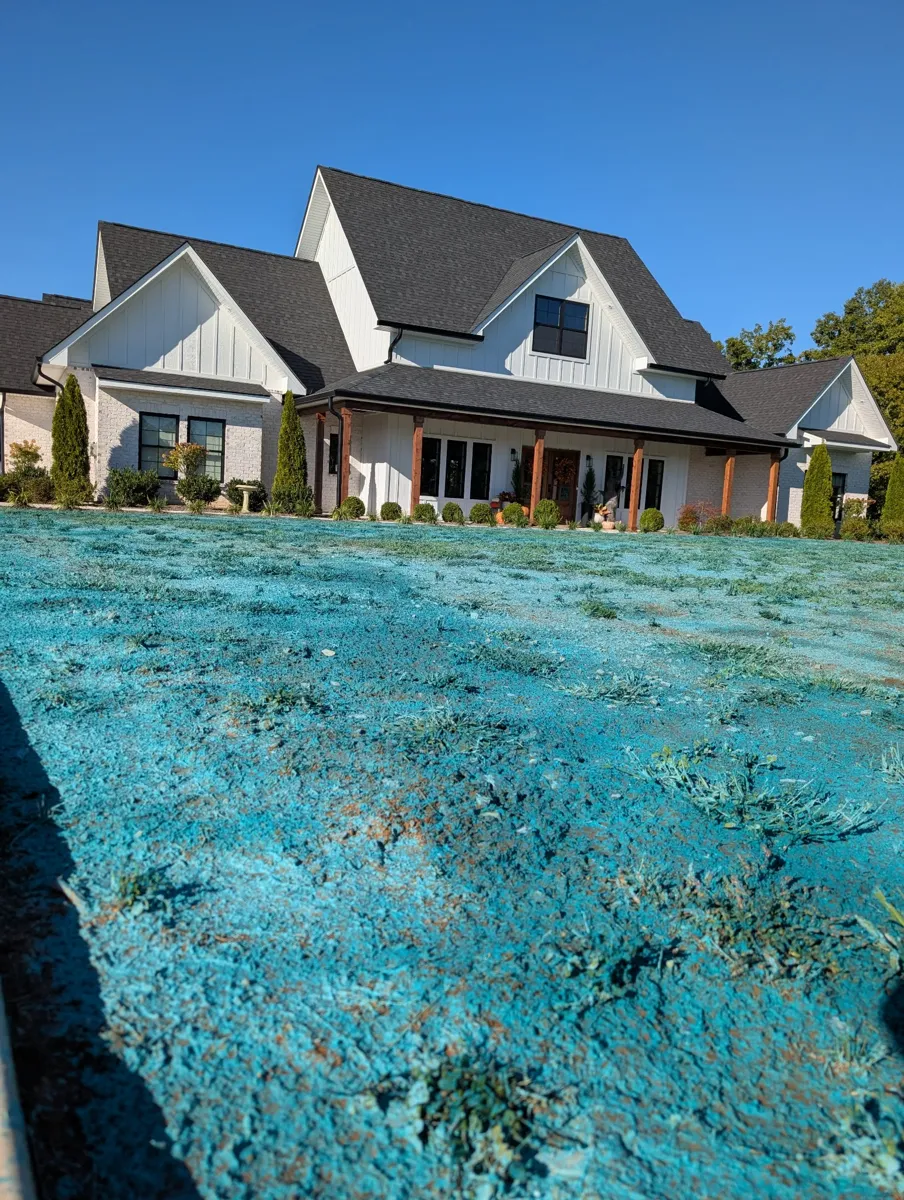
If your lot in Knoxville is that familiar orange-red clay, you've probably wondered whether grass can grow on it at all. It can. Red clay actually holds nutrients well — better than sand, in fact. The problem is how it behaves: it packs down tight underfoot and under tires, it drains slowly so water sits on top instead of soaking in, and it crusts over hard in the summer sun. All of that makes it a rough place for seed to get started on its own.
That's exactly where hydroseeding earns its keep. The mulch in the tank mix goes down as a wet blanket over the clay, and that layer does three jobs at once. It holds the seed against the soil so it doesn't wash downhill in the next rain. It holds moisture around the seed so it can germinate instead of drying out between waterings. And it keeps the surface from baking into a hard crust while the grass gets established. On clay, that mulch layer matters more than it does on loam — it's the difference between seed that takes and seed that just sits there.
A couple of things matter on red clay specifically. First, the surface shouldn't be graded glass-smooth before we spray. A rough, lightly scarified surface gives the seed and mulch something to bite into; a slick, sealed surface sheds water and takes the mix with it. Second, watering has to be gentle and frequent at the start. Clay puddles fast, and a hard blast from a sprinkler will move seed around and carve little channels. Short, light waterings a few times a day keep the mulch damp without flooding it. Once the grass is up and has been mowed a couple of times, the roots start breaking the clay up on their own, and the lawn keeps improving from there.
One honest note: clay doesn't transform overnight. The first season can look a little uneven in the spots where the clay was most compacted — around driveways, along the path the grading equipment took, that kind of thing. That's normal, and it's why we guarantee the work. If a small spot doesn't take, we come back and re-spray it free. No arguing about whose fault it was. On tough soil, that's just part of the deal.
Fall is the best time to do it here. Seed that goes down in the fall overwinters and comes up stronger in spring, so you get better grass in year one than with a spring planting. If your red clay lot is bare right now, this is the window — the soil is still warm enough to germinate, and the cooler air means the mulch doesn't dry out as fast between waterings.
Pricing is straightforward. It's $700 per tank, and one tank covers up to 2,500 square feet — most residential lots take one or two tanks. Bigger properties run $6,000 per acre. We've sprayed plenty of red clay across East Tennessee, so this isn't an experiment. It's routine work, and we know how the mix behaves on this soil. You can read more about our approach at Knoxville hydroseeding.
People ask whether they should truck in topsoil over the clay first. Usually, no. A thick cap of topsoil over clay can create a layered pan where water sits at the boundary and roots never push through. The mulch in the hydroseed mix does the job of a topsoil cap without the layering problem, and the grass roots do the long-term work of loosening the clay from the inside. Save the topsoil money for the spots that are genuinely low or washing out.
If you're staring at a red clay yard in Knoxville and wondering what to do with it, call 423-358-2317 or request a free quote on the site. We'll tell you straight whether your lot is a good candidate and what it would take. No pressure, no upsell — just an honest read on your soil.
Want it handled start to finish? The East Tennessee hydroseeding crew does the prep, the spray, and the follow-up.
Every yard is different. Get a free quote from East Tennessee hydroseeding before you decide.