Birds, Washouts, and Bare Spots: Troubleshooting a Patchy Start
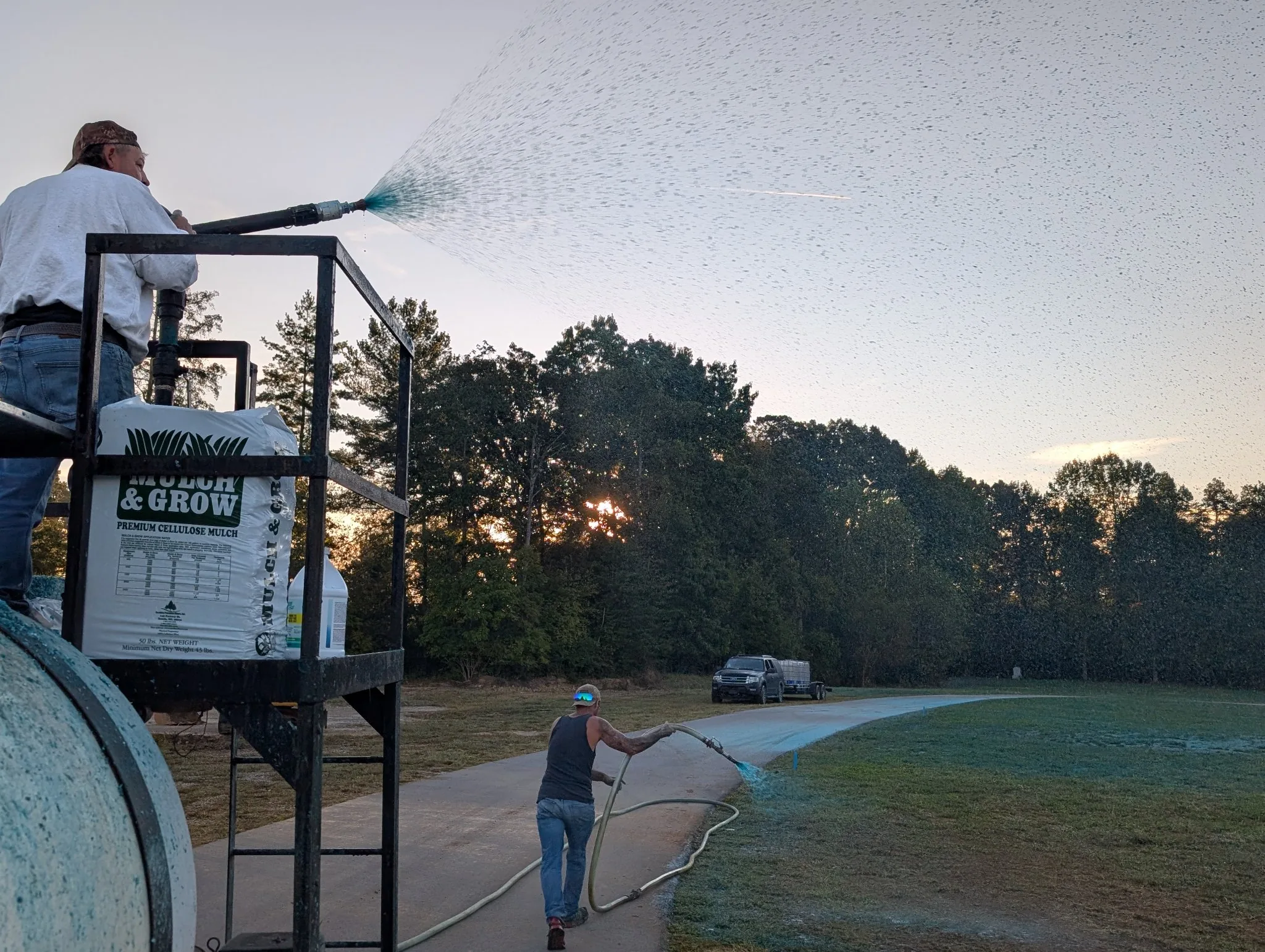
Almost every new lawn has a week where it looks uneven, and almost every owner starts diagnosing it from the porch, where everything looks worse than it is. A patchy start is common in East Tennessee and it is usually fixable, because the causes are a short, familiar list. Birds, moving water, watering gaps, and buried trouble under the surface account for most thin and bare spots. The trick is matching the fix to the actual cause instead of reseeding everything and hoping the second try reads your mind.
Birds get blamed first, so let us be fair to them. Birds do eat exposed seed, and on dry-seeded yards they can do real damage. On a hydroseeded yard, the seed is tucked under and into the mulch layer, which makes it much harder to pick at, and the mulch holds it against the soil. If you see birds working your new lawn, watch what they are actually after. Often they are pulling worms and insects in soft, damp ground, disturbing the surface lightly without removing much seed. Bird damage on hydroseed is usually minor. A whole bare patch is rarely their work, and chasing them off will not fix a patch they did not cause.
Washouts are the more honest culprit. A hard Knoxville rain on a fresh yard finds the low path, and seed and mulch travel with the water. The evidence is readable: a bare or thin streak following the flow line, mulch piled or darkened at the bottom of the run, and a healthy lawn on both sides of the channel. That pattern is a water management story, not a bad seed story. The fix is to address the flow, smoothing the channel, redirecting a downspout, or breaking up the run, and then repair the strip. Reseeding the same channel without changing the water just schedules the same result for the next storm.
Watering gaps make the quietest patches. The corner beyond the sprinkler's reach, the strip along a hot driveway, the top of a slope that sheds water to the bottom: these spots dry between waterings while the rest of the yard stays damp, and their seed either germinates late or not at all. Before you conclude anything about a bare area, get down and feel the soil under the mulch there, at midday, and compare it with a healthy section. Nine times out of ten the dry patch feels dry. Adjust coverage, add a short cycle, or hand-water the strays for a couple of weeks and many of them will fill in on the original seed still waiting there.
Occasionally the cause is under the ground: a buried rock, construction debris, a spot where the soil is pure compacted subsoil, or a shallow pocket that bakes in the sun. If one small area fails while everything around it thrives on identical water, suspect the ground itself. That spot may need the debris removed and the surface loosened before new seed has any chance, which is slower work than spraying, but it only has to be done once.
Here is the part that should lower your blood pressure. If a small spot does not take, we offer free return visits to address it. That policy exists precisely because patchy starts happen on good jobs. You can also find general care guidance at Knoxville hydroseeding for what normal germination looks like week by week. Bring us a photo and a description of the pattern before you bring us a verdict.
If you are troubleshooting a patchy lawn now, or planning a job in the Knoxville area and want this honesty before you start, call 423-358-2317 or request a free quote. Hydroseeding is $700 per tank covering up to 2,500 square feet, or $6,000 per acre for larger properties, and straight answers are included either way.
Want it handled start to finish? The East Tennessee hydroseeding crew does the prep, the spray, and the follow-up.
Every yard is different. Get a free quote from East Tennessee hydroseeding before you decide.