A New Lawn by Hydroseeding in Powell: What to Expect Week by Week
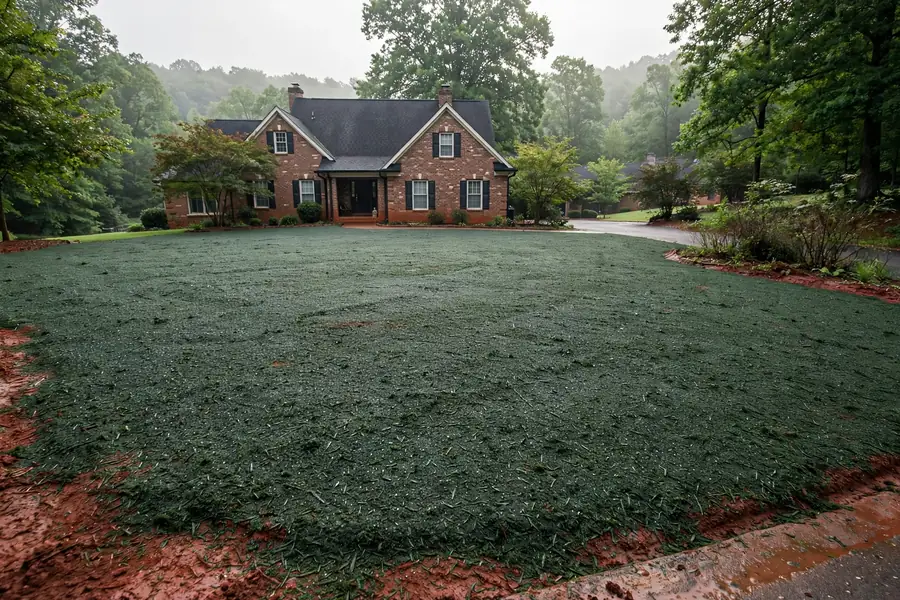
Powell is full of growing neighborhoods where families move in and immediately face the same project: turning a builder's dirt yard into a lawn the kids and the dog can actually use. Hydroseeding a new lawn here is a process with clear stages, and knowing what each stage looks like keeps people from panicking at day five or declaring victory at day ten. Here is the honest week-by-week picture for a typical Powell yard seeded in good weather.
Week one is the mulch week. The yard goes down green from the spray, which is the mulch and a dye that helps the applicator see coverage, not instant grass. Your job is watering: light and frequent, keeping the layer damp without puddling it. On Powell's clay-heavy lots, short cycles work better than long soaks because the ground absorbs slowly. Keep foot traffic off as much as you reasonably can, keep the dog's laps to a minimum, and do not rake or fuss with the surface even if a corner looks uneven. Under that mulch, seed is swelling and getting started where you cannot see it.
Weeks two and three are when it gets encouraging. Sprouts show first in the spots that stay most evenly moist, often along shaded edges and lower areas, then fill across the yard. It will look patchy at the start of this stage, and that is normal, because germination is staggered by moisture and soil temperature across even a small lot. Keep watering on the frequent schedule while roots are shallow. This is also the stage where a heavy rain can test the job. The tackifier in the mix helps the mulch stay put, and a normal rain is fine, but if a genuine gully-washer cuts a channel, note where it happened, because moving water, not bad seed, is usually the story there.
Weeks four through six, the lawn starts acting like a lawn. Growth thickens, color evens out, and you can taper watering toward deeper, less frequent sessions that push roots down into the soil. Hold off mowing until the grass is tall enough that a first cut only trims the top, and use a mower that is not dragging or tearing at soft ground. Powell summers and falls both throw warm spells at new lawns, so watch how the yard responds on sunny afternoons and adjust water rather than following a calendar blindly. A lawn read week by week beats a schedule followed off a cliff.
The cost side of a Powell new lawn is refreshingly undramatic. Hydroseeding is $700 per tank in the Knoxville area, and one tank covers up to 2,500 square feet, with larger properties at $6,000 per acre. Most new subdivision yards are a tank or a few, and the application includes seed, mulch, and starter fertilizer in one visit. You can see the rundown of what a job includes at Knoxville hydroseeding if you are budgeting a move-in list and want the lawn line item settled early.
A few expectations protect your sanity. First, thin edges along driveways and sidewalks dry faster from the heat radiating off concrete, so they may lag and need extra water attention. Second, a few weeds showing up does not mean the job failed; new soil has weed seed in it, and a thickening lawn is the long-term answer, not spraying young grass. Never use weed-and-feed on a new lawn at this stage, and remember it never belongs in the hydroseed tank either, since it kills germinating seed. Third, small disappointments are fixable. If a small spot does not take, we offer free return visits to address it.
If you are settling into a Powell home and the yard is the last unfinished piece, call 423-358-2317 or request a free quote. We will measure the lot, talk through the watering honestly, and get your new lawn started on the right week instead of the hopeful one.
Want it handled start to finish? The East Tennessee hydroseeding crew does the prep, the spray, and the follow-up.
Every yard is different. Get a free quote from East Tennessee hydroseeding before you decide.